
Fish do not react to the pound test printed on your spool—they react to the leader that's actually in the water. When fish become pressured or the water clears up, factors like leader diameter, suppleness, knot seating, and manufacturing consistency often influence bait presentation more than the number printed on the package.
Key Takeaways
- Pound test measures strength—not how naturally your leader fishes.
- Leader diameter often affects bait presentation more than the label.
- A supple leader allows live bait to swim more naturally.
- Poorly seated knots and inconsistent line can create unnecessary problems.
- Premium fluorocarbon isn't always necessary—but it matters more when fish get picky.
- Cleaner presentation removes reasons for fish to refuse the bait.
Most anglers blame the bait first.
The sardine looked lively in the tank, but after one cast it started pulling sideways instead of swimming away from the boat. Meanwhile, three anglers down the rail were getting picked up one after another using bait from the same scoop.
It wasn't because they were fishing "30-pound."
It was because everything between the reel and the hook worked together a little cleaner.
When the bite gets technical, fish aren't inspecting the number printed on your spool. They're reacting to how your presentation looks underwater.
What Does Pound Test Actually Mean?
Pound test simply describes how much force a fishing line can withstand before breaking under controlled conditions.
It does not tell you:
- How thick the leader is
- How stiff it feels
- How smoothly it knots
- How consistently it was manufactured
- How naturally your bait will swim
Two leaders with the same pound test can behave very differently in the water.
That's why experienced anglers often look beyond the label.

Why Do Fish Care More About the Line Than the Label?
Fish never see the packaging.
They react to what your presentation tells them.
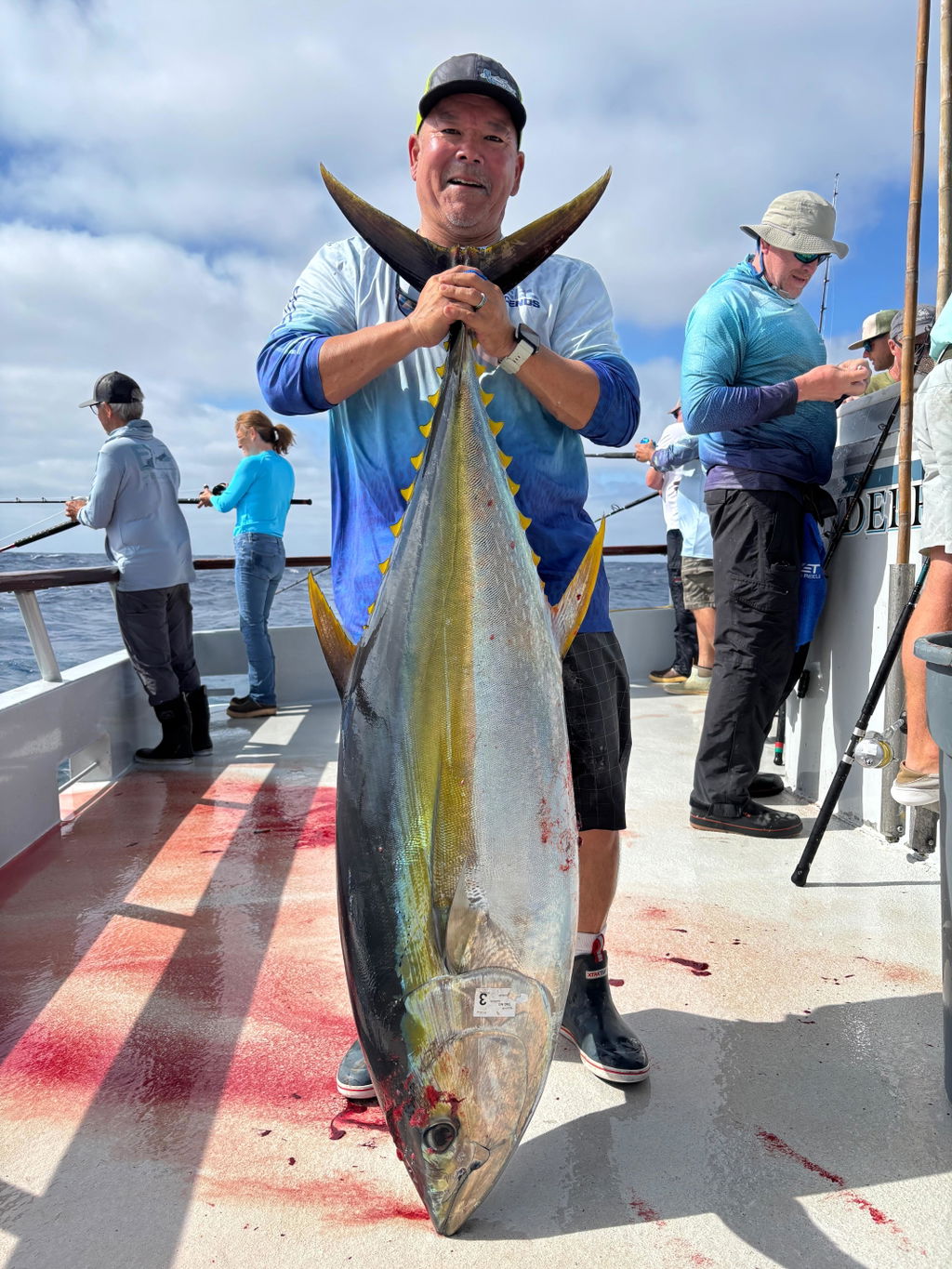
During wide-open bites, almost any reasonably rigged leader can get bit. But once bluefin start following flylined sardines without committing, yellowtail inspect baits along kelp edges, or dorado become selective around paddies, small details begin separating anglers who hook fish from those who simply watch boils.
That's where leader characteristics become more important than the advertised breaking strength.

What Is Leader Diameter?
Leader diameter is the actual thickness of the fishing line.
A smaller-diameter leader creates less drag in the water, helps live bait swim with less resistance, and presents a smaller profile to fish.
That doesn't automatically make it the right choice every time. Abrasion, target species, and fishing conditions still matter.
But when fish become pressured, diameter often becomes one of the first things experienced anglers adjust.
As Greg Brown explains:
"Pound test is what anglers read on the spool. Diameter is what fish deal with in the water."
— Greg Brown, Founder, Opsin Fluorocarbon

Why Does Supple Line Matter?
Diameter is only one part of the equation.
A leader can still be difficult to fish if it's overly stiff.
Supple fluorocarbon allows a flylined sardine or anchovy to separate from the boat more naturally. Instead of feeling tethered, the bait can swim cleaner through the water column.
When fishing Southern California bluefin on flylined sardines, that natural movement often becomes more important as boat pressure builds throughout the day.
Again, that doesn't guarantee bites.
It simply removes another reason for fish to refuse the bait.

Can a Good Knot Make a Difference?
Absolutely.
Even strong fluorocarbon can lose performance if the knot isn't seated correctly.
A bulky or poorly tied knot can:
- Restrict bait movement
- Create unnecessary drag
- Reduce overall knot strength
- Cause unexpected failures under pressure
Experienced anglers inspect their knots almost as often as they inspect their bait.
If your connection doesn't look clean, neither does your presentation.

Why Does Manufacturing Consistency Matter?
Consistency is something many anglers never think about.
But it's one of the biggest differences between premium and budget leaders.
Inconsistent diameter can affect:
- Knot performance
- Strength from one section to another
- Leader handling
- Overall confidence during a long fight
When every spool is produced consistently, anglers know what they're fishing every time they tie on a new leader.
When Does Pound Test Still Matter?
Pound test absolutely matters.
You still need enough strength for:
- Bluefin tuna
- Fishing around kelp
- Rocky structure
- Heavy abrasion
- Long fights
The mistake isn't paying attention to pound test.
The mistake is assuming it's the only thing worth paying attention to.
Good anglers balance strength with presentation.
Great anglers know when presentation becomes the deciding factor.

What Should You Look At Before Buying Fluorocarbon?
Instead of asking only:
"What pound test do I need?"
Ask yourself:
- How clear is the water?
- Are fish heavily pressured?
- What size bait am I fishing?
- Will a smaller diameter improve presentation?
- Does this leader stay supple?
- Does it tie dependable knots?
- Is the diameter consistent throughout the spool?
Those questions usually tell you more than the label alone.
Decision Guide
| What You're Looking At | Why It Matters |
|---|---|
| Pound test | Determines breaking strength |
| Leader diameter | Influences bait presentation and profile |
| Supple finish | Helps live bait swim naturally |
| Knot seating | Improves reliability and cleaner rigging |
| Manufacturing consistency | Creates predictable performance |
| Fishing conditions | Determines whether presentation matters more than strength |
Where Does Opsin Fit?
Opsin Fluorocarbon is built for the situations where small details begin making a difference.
Its slow-extrusion process in Japan helps produce consistent diameter, a supple finish, strong knot performance, cloud-free clarity, and dependable abrasion resistance.
The goal isn't to convince every angler to fish premium fluorocarbon every cast.
The goal is to provide a cleaner, more consistent leader when fish begin inspecting every presentation.
As Alan Bierig puts it:
"When the bite gets technical, you stop looking for magic and start removing little problems. A clean leader is one less thing working against your bait."
— Alan Bierig, Co-owner & Long-Range Angler

Quick Checklist
Before blaming the fish, ask yourself:
- Is my bait actually healthy?
- Is my leader oversized for the bait?
- Does the leader feel overly stiff?
- Is my knot seated cleanly?
- Am I fishing the right strength for these conditions?
- Is someone else getting bit with a cleaner presentation?
- Am I choosing line based only on pound test?
FAQ
Does leader diameter matter more than pound test?
Not always. Pound test determines strength, but leader diameter often has a greater impact on bait presentation when fish become selective.
Is a smaller diameter always better?
No. Choose enough strength for the species and conditions first. Then use the smallest appropriate diameter that still provides confidence.
Why do two 30-pound leaders fish differently?
Different manufacturers can produce leaders with different diameters, stiffness, finishes, and consistency even if the pound test is identical.
Does a supple fluorocarbon help live bait?
Yes. A more supple leader generally allows sardines and anchovies to swim with less restriction, creating a cleaner presentation.
When should I pay closer attention to leader characteristics?
Leader characteristics become more important during clear water, heavy boat pressure, picky bluefin bites, cautious yellowtail, and situations where fish inspect bait before committing.
Is premium fluorocarbon necessary every trip?
No.
During wide-open bites, it often won't be the deciding factor.
But when fish become pressured and presentations need to look as natural as possible, higher-quality fluorocarbon can help remove small details that lead to refusals.
Final Takeaway
Most anglers shop for the number printed on the spool.
Fish never do.
They react to the leader that's actually moving through the water.
Pound test will always matter because strength matters.
But when the bite gets technical, cleaner presentation often comes from the details you can't read on the label—diameter, suppleness, knot quality, and consistency.
Fluorocarbon isn't magic.
It simply removes a few more reasons for fish to say no.
Cleaner presentation starts with the details fish actually notice. Explore the Opsin Fluorocarbon collection and choose the leader built for technical bites—not just the label on the spool.