
Opsin Fluorocarbon Leader – 20 lb (0.37 mm)
Built for kelp bass, rockfish, and medium inshore species when live bait presentation matters and the fish are still line-shy. A high-leverage weight class where Opsin's diameter story is strongest - thinner than every listed competitor at 20 lb test.
Free US shipping on orders over $29.99 · Ships fast from the US · 30-day returns — returns policy
"Strong and flexible. This is the only leader line I've been using for the past two years and absolutely love it."
— John Rowe, 20 lb customer
Read why diameter beats pound test →
- Thinnest 20 lb leader in its class at 0.37 mm — sardines and anchovies swim the way they're supposed to because there's less leader for them to fight and less line for fish to see.
- Enough pull for structure, kelp, and harder-fighting inshore fish — adds real stopping power without making the leader part of the reason fish don't commit.
- Strong knot integrity when the bite gets sporty and mistakes get exposed — seats clean under load so the connection holds when a better fish shows up on a lighter rig.
- One of the best strength-to-diameter stories in the lineup — the point where Opsin's slow-extrusion advantage is most visible against what else is on the market.
- Kelp bass, rockfish, and medium inshore structure — where live bait presentation and stopping power both matter
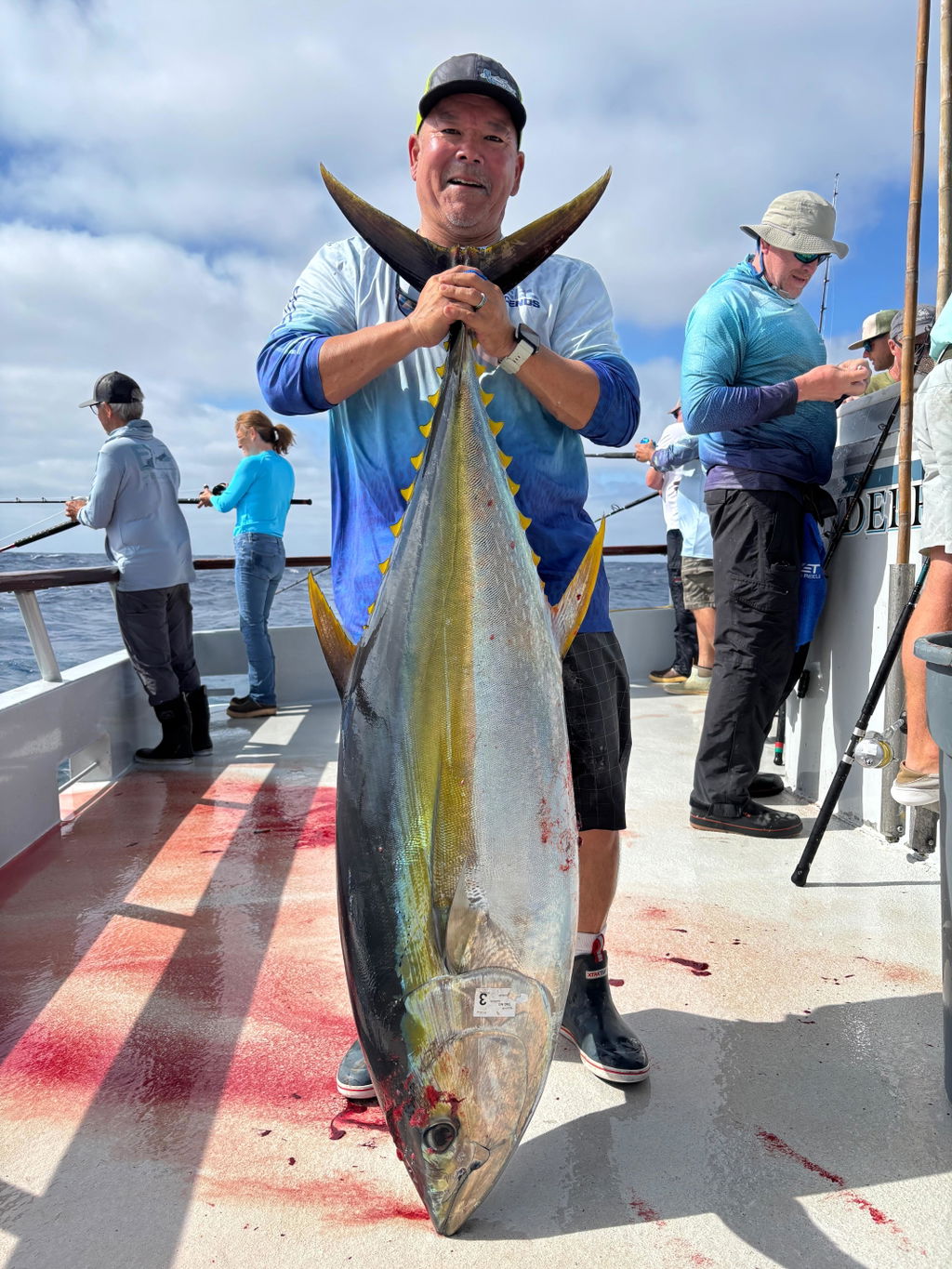
- Yellowtail and school-size offshore on smaller bait — clear-water offshore fish that inspect the leader
- Any clear-water 20 lb application — where fish are line-shy and bait has to swim right


What knots should I run with Opsin fluoro?
Braid to leader: an FG or RP knot, tied slow and seated with even pressure. Terminal: a San Diego jam or uni to the hook. Wet the line before you cinch — fluorocarbon holds best when the knot seats clean without friction burn. Full breakdown: Best Knots for Fluorocarbon.
How does fluorocarbon handle abrasion and sun?
Better than mono on both counts. Fluorocarbon is denser and harder-skinned, so it takes contact with kelp, rocks, and gill plates without going fuzzy, and it doesn't break down in UV or soak up water. Check your last few feet after every fish and re-tie when it feels rough — cheap insurance.
Is this a leader or a mainline?
Leader. These spools run 25–100 yd — built to top-shot your braid, not fill a reel. Tie in a rod's length or two; the thin diameter is what keeps line-shy fish committing.
Built for kelp bass, rockfish, and medium inshore species when live bait presentation matters and the fish are still line-shy. A high-leverage weight class where Opsin's diameter story is strongest - thinner than every listed competitor at 20 lb test.
Free US shipping on orders over $29.99 · Ships fast from the US · 30-day returns — returns policy
"Strong and flexible. This is the only leader line I've been using for the past two years and absolutely love it."
— John Rowe, 20 lb customer
Read why diameter beats pound test →
- Thinnest 20 lb leader in its class at 0.37 mm — sardines and anchovies swim the way they're supposed to because there's less leader for them to fight and less line for fish to see.
- Enough pull for structure, kelp, and harder-fighting inshore fish — adds real stopping power without making the leader part of the reason fish don't commit.
- Strong knot integrity when the bite gets sporty and mistakes get exposed — seats clean under load so the connection holds when a better fish shows up on a lighter rig.
- One of the best strength-to-diameter stories in the lineup — the point where Opsin's slow-extrusion advantage is most visible against what else is on the market.
- Kelp bass, rockfish, and medium inshore structure — where live bait presentation and stopping power both matter
- Yellowtail and school-size offshore on smaller bait — clear-water offshore fish that inspect the leader
- Any clear-water 20 lb application — where fish are line-shy and bait has to swim right
What knots should I run with Opsin fluoro?
Braid to leader: an FG or RP knot, tied slow and seated with even pressure. Terminal: a San Diego jam or uni to the hook. Wet the line before you cinch — fluorocarbon holds best when the knot seats clean without friction burn. Full breakdown: Best Knots for Fluorocarbon.
How does fluorocarbon handle abrasion and sun?
Better than mono on both counts. Fluorocarbon is denser and harder-skinned, so it takes contact with kelp, rocks, and gill plates without going fuzzy, and it doesn't break down in UV or soak up water. Check your last few feet after every fish and re-tie when it feels rough — cheap insurance.
Is this a leader or a mainline?
Leader. These spools run 25–100 yd — built to top-shot your braid, not fill a reel. Tie in a rod's length or two; the thin diameter is what keeps line-shy fish committing.