 Before buying fluorocarbon, identify the problem you're trying to solve. Fluorocarbon can improve bait presentation, leader diameter, abrasion resistance, and stealth, but it won't fix poor bait, bad knots, or weak technique. The best leader choice depends on water clarity, fish behavior, fishing pressure, and how naturally your bait moves.
Key Takeaways
-
Fluorocarbon solves several different fishing problems.
-
Visibility is only one advantage.
-
Leader diameter influences presentation and bait movement.
-
Stiff leaders can negatively affect live bait.
-
Abrasion resistance matters around structure.
-
Fluorocarbon helps remove reasons for fish to refuse.
-
Understanding the problem is more important than buying a solution.
Why Isn't Fluorocarbon Just One Thing?
One of the biggest misconceptions in fishing is that fluorocarbon has a single job.
Many anglers think it's only about making your leader harder for fish to detect. In reality, fluorocarbon solves several different problems depending on the conditions.
It can help by providing:
- A smaller leader profile
- Better abrasion resistance around rocks, kelp, and structure
- Cleaner bait presentation
- More natural bait movement
- Strong knot performance
- Consistent sink characteristics
The key is understanding which of those actually matters today.
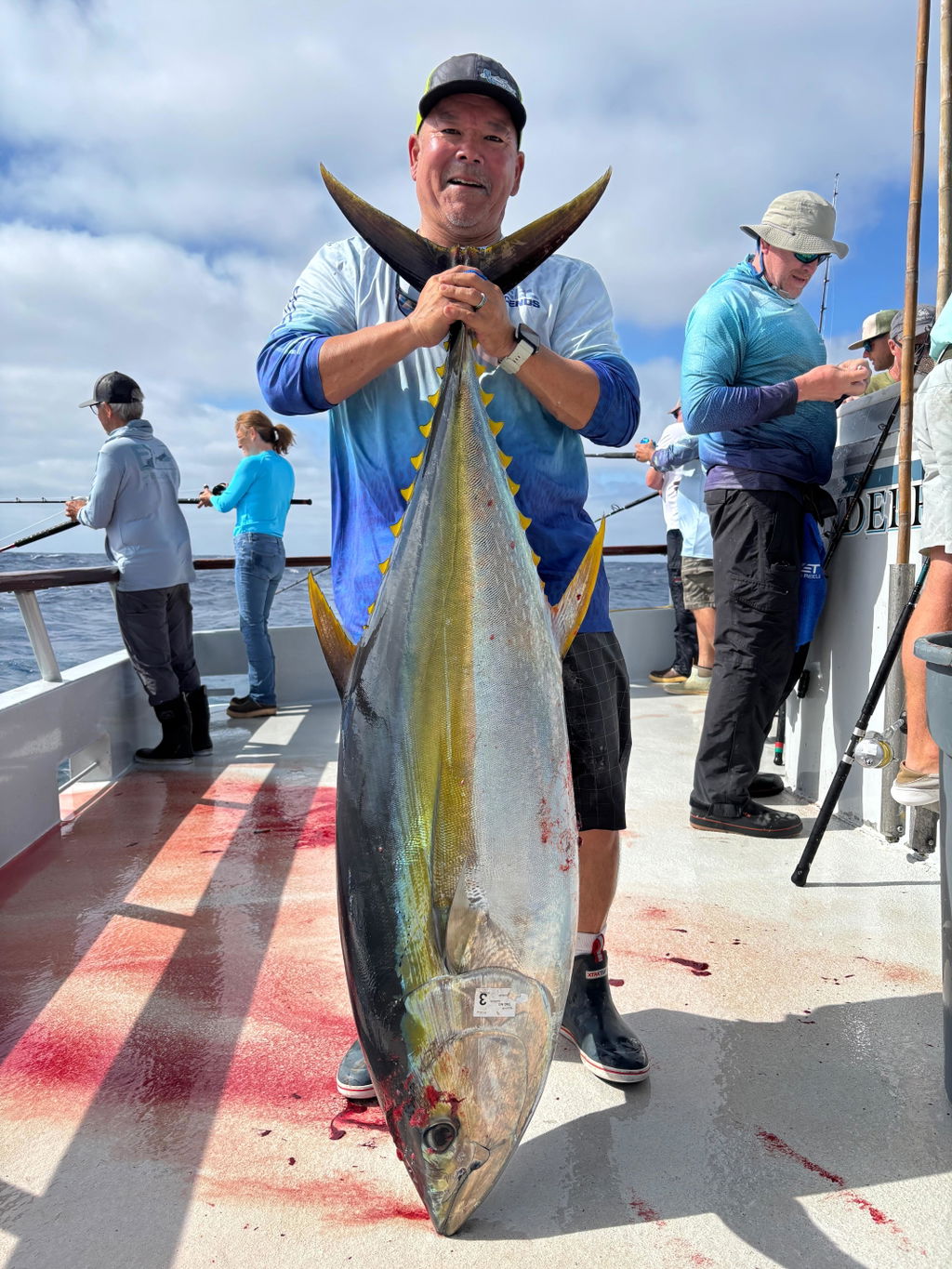
A wide-open dorado bite may not demand premium fluorocarbon at all. But when bluefin are following flylined sardines without committing or pressured yellowtail are inspecting every bait around the kelp, small presentation details become much more important.
"Most anglers don't need premium fluorocarbon every cast. But when fish get picky, the wrong leader gives them one more reason to say no. Our goal has always been to remove those unnecessary reasons."
— Greg Brown, Founder, Opsin Fluorocarbon
Is Leader Visibility Costing You Bites?
If you're fishing in clear water and fish are inspecting your bait before refusing it, visibility may be part of the issue.
Clear water gives fish more time to evaluate what they're seeing.
Heavy leader becomes easier to notice.
Large profiles stand out.
Unnatural presentations become obvious.
Fluorocarbon can help reduce visual cues that make fish suspicious.
But visibility is only one piece of the puzzle.
Why Does Bait Movement Matter?
Many anglers blame leader visibility when the real problem is bait movement.
Fish often react to how naturally a bait swims long before they notice the leader itself.
You see it all the time on Southern California sport boats. Two anglers grab sardines from the same tank. One bait swims away cleanly and gets picked up. The other spins, drags behind the boat, or never separates from the chum line.
Same bait.
Different presentation.
This is especially important when fishing:
- Flylined sardines for bluefin tuna
- Anchovies during picky bites
- Yellowtail around kelp
- Weightless plastics
- Small swimbaits
A supple leader allows the bait to swim more freely instead of fighting against the line.
Sometimes fish aren't rejecting your fluorocarbon.
They're rejecting what the bait is doing.

Can Leader Stiffness Hurt Presentation?
Stiffness is one of the most overlooked characteristics in fishing line.
Many anglers focus only on pound test.
Fish don't care what the label says.
They react to what the bait is doing.
A stiff leader can:
-
Restrict movement
-
Create drag
-
Change the bait's direction
-
Make live bait appear tethered
-
Reduce natural action
If your bait isn't swimming freely, stiffness may be a bigger issue than visibility.
Why Does Leader Diameter Matter?
Two leaders can both be labeled 20-pound test and perform very differently.
The difference is often diameter.
A larger-diameter leader creates more drag, presents a larger profile in the water, and can slightly affect how naturally live bait swims.
As the bite becomes more technical, those small differences become easier for fish to detect.
That doesn't mean the smallest leader is always the answer. Around heavy structure or larger fish, abrasion resistance may be the higher priority.
The goal is matching your leader to the conditions instead of fishing the label on the spool.
Does Abrasion Resistance Matter More Than Stealth?
Sometimes visibility isn't the issue at all.
Sometimes the problem is abrasion.
Fishing around:
-
Rocks
-
Kelp
-
Dock pilings
-
Mussels
-
Coral
-
Heavy cover
creates constant opportunities for line damage.
In these situations, abrasion resistance may matter far more than stealth.
The goal isn't to hide the leader.
The goal is to survive contact long enough to land the fish.
Can Leader Material Affect Sink Rate?
Many anglers overlook how line affects sink rate.
Leader diameter and material characteristics influence how quickly a bait reaches depth.
Sometimes fish are feeding deeper than expected.
A bait that sinks naturally can stay in the strike zone longer.
The issue may not be visibility.
The issue may be that your presentation isn't getting where it needs to go.
What If Fish Are Following But Not Eating?

This is one of the most common scenarios where anglers start searching for answers.
The fish see the bait.
They follow.
They inspect.
Then they turn away.
At this point, the question isn't whether fish are present.
The question is why they're refusing.
Possible reasons include:
-
Leader visibility
-
Excessive diameter
-
Stiffness
-
Poor bait movement
-
Heavy terminal tackle
-
Fishing pressure
Fluorocarbon can help address some of these issues—but only if you've correctly identified the problem first.
Often, the difference between getting followed and getting bit comes down to small presentation details that fish notice.
"Some of the toughest bites I've seen weren't because the fish disappeared—they were still there. They simply stopped accepting presentations that looked slightly off. That's when small details start making the biggest difference."
— Alan Bierig, Co-owner, Opsin Fluorocarbon
What's the Wrong Question?
Many anglers ask:
"Should I buy fluorocarbon?"
That's the wrong question.
A better question is:
"What problem am I trying to solve?"
Because if the real issue is poor bait selection, weak presentation, bad knots, or incorrect technique, changing leader material won't solve much.
Quick Checklist
Before changing leaders, ask yourself:
- Is my bait actually healthy?
- Is my leader oversized for the bait?
- Is the leader restricting movement?
- Is my knot bulky or poorly seated?
- Am I fishing around rocks, kelp, or heavy structure?
- Are fish following without committing?
- Is someone nearby consistently getting bit on a lighter or cleaner setup?
Changing fluorocarbon only makes sense after you've identified what the real problem is.
How Does Opsin Solve These Problems?
At Opsin, we don't believe fluorocarbon is magic.
We believe anglers catch more fish when they understand what's happening beneath the surface.
If presentation is the issue, leader suppleness and diameter matter.
If fish are inspecting your bait in clear water, profile matters.
If you're fishing around kelp, rock, or structure, abrasion resistance becomes more important than stealth.
Opsin Fluorocarbon is slow-extruded in Japan and built for anglers who need consistency when conditions become technical. Features like a supple finish, cloud-free clarity, consistent diameter, strong knot performance, and abrasion resistance help create cleaner bait presentation without pretending the line is the only reason fish bite.
"I've watched plenty of anglers catch bluefin on different leader brands when the fish were chewing. But when the bite slows down and fish start inspecting every sardine, cleaner presentation can make the difference between getting followed and getting bit."
— Alan Bierig, Co-owner & Long-Range Angler

Related Reading
Want to dive deeper into choosing the right leader? These articles expand on the ideas covered here:
- 90% of Anglers Don't Need Fluorocarbon — Until They Do – Learn when fluorocarbon actually makes a difference and when mono is perfectly capable.
- Fluorocarbon Won't Save Bad Fishing — But It Can Save a Good Presentation – Understand why leader material supports good technique instead of replacing it.
- Fishing Line Diameter: The Detail That Decides Who Gets Bit – Discover why diameter often matters more than the pound-test printed on the spool.
- Presentation Matters Most When the Bite Gets Tough – See how subtle presentation changes can turn follows into bites when fish become selective.
FAQ
Does fluorocarbon automatically get more bites?
No. Fluorocarbon helps improve presentation and remove reasons for fish to refuse, but it doesn't force fish to bite.
Is fluorocarbon only about visibility?
No. Visibility is only one advantage. Diameter, abrasion resistance, bait movement, and presentation also matter.
Why does leader diameter matter?
Diameter affects profile, resistance, sink rate, and bait movement.
Can stiff leaders hurt bait presentation?
Yes. Excessive stiffness can restrict movement and make bait appear unnatural.
When should I consider fluorocarbon?
When fish become selective, water is clear, bait presentation matters, or abrasion resistance becomes important.
Final Takeaway
Don't buy fluorocarbon because someone says it's better.
Buy it because you've identified a problem it's actually designed to solve.
Sometimes that's visibility.
Sometimes it's leader diameter.
Sometimes it's abrasion resistance.
Sometimes it's bait movement.
Sometimes it isn't fluorocarbon at all.
Successful anglers don't just change gear—they diagnose what's happening on the water.
When presentation becomes the limiting factor, a supple fluorocarbon leader with consistent diameter, strong knot performance, and clean bait presentation can remove one more reason for fish to refuse.
Fluorocarbon isn't magic.
It simply helps remove a few more reasons for fish to say no.
Opsin Gets You Bit.