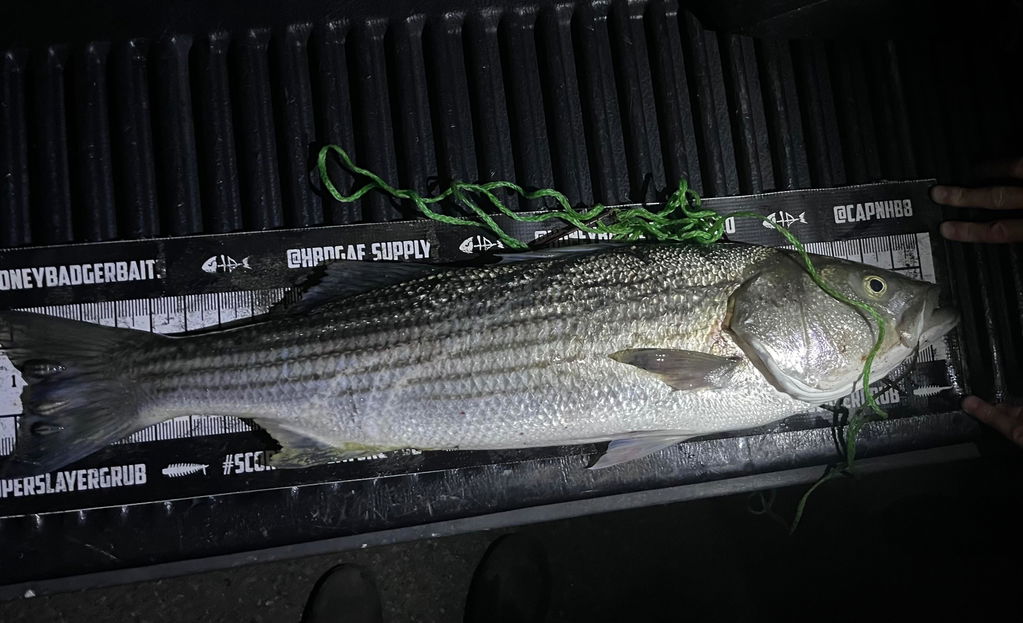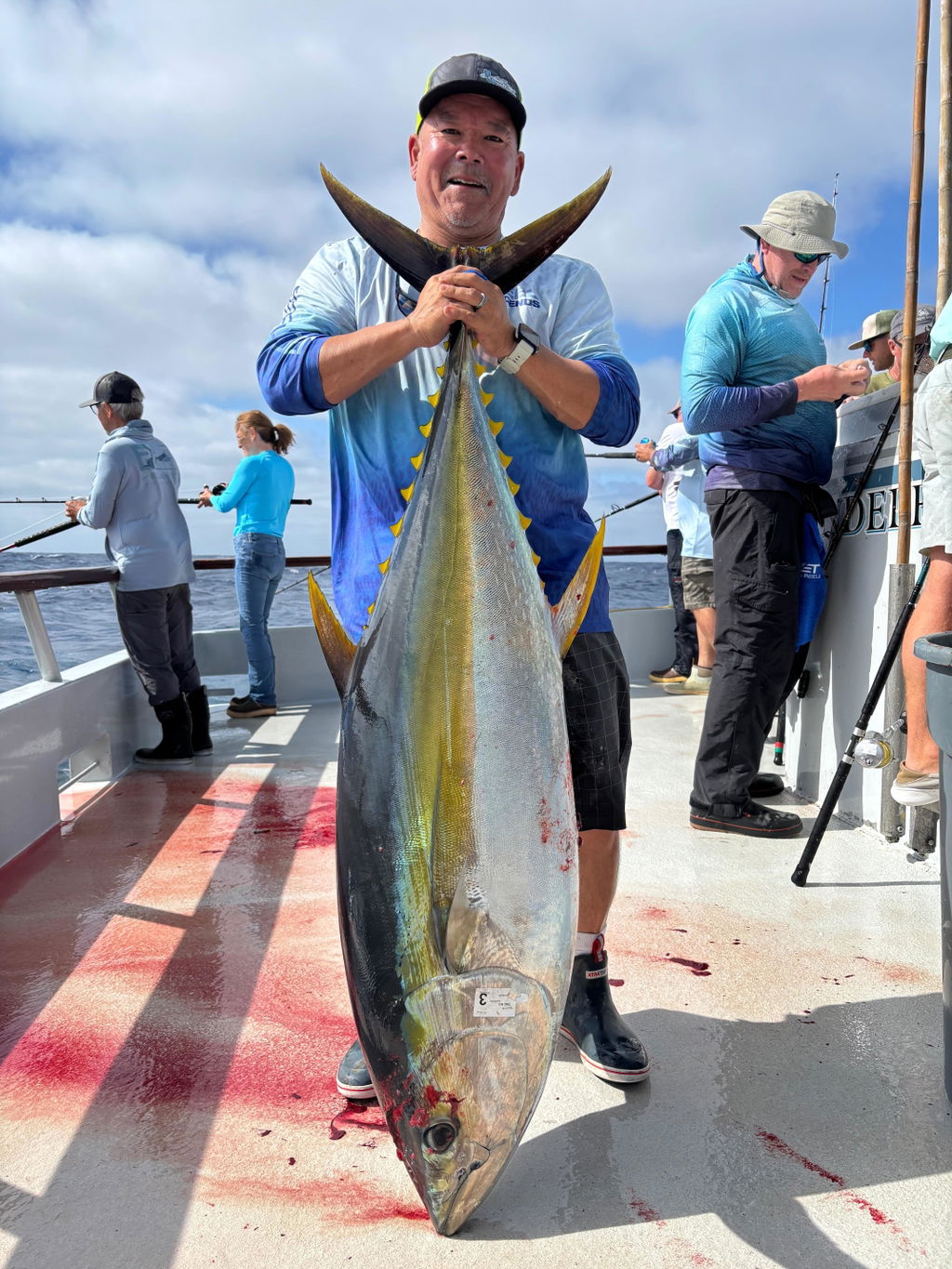

Bluefin tuna can bite well on the slide because a moving boat may bring a properly presented live bait into feeding fish before the school changes direction, sinks out, or reacts to the boat. The advantage comes from timing, boat position, bait placement, and natural presentation—not simply from using lighter fluorocarbon.
The slide is the period when a boat is slowing after running toward a school or stopping on a fish mark, but still has forward momentum.
For anglers fishing live sardines, those few moments can create an opportunity to put a bait near fish before the boat settles into a drift.
But a slide bite is not guaranteed.
And not every school responds the same way.
Sometimes the fish are already moving away.
Sometimes the boat slides past the best position.
And sometimes the bait never reaches the fish in time.
The difference between getting bit and watching the school disappear often comes down to preparation.
You are standing at the rail with a sardine ready.
The captain calls out fish.
The boat comes off speed.
A few anglers make their casts.
One sardine lands ahead of the school.
Another lands behind it.
A third never gets clear of the boat.
Then a reel starts screaming.
The angler who got bit may not have been fishing a special leader.
He may simply have put a healthy bait in the right water at the right moment.
On the slide, a good presentation has to arrive on time.
Key Takeaways
-
The slide is the transition from a moving boat toward a slower drift or stop.
-
Bluefin may bite during this period when the boat and bait intersect with feeding or traveling fish.
-
Casting direction and boat momentum can matter as much as casting distance.
-
A healthy sardine that swims naturally is more useful than a poorly handled bait cast farther.
-
Smooth line feeding helps prevent unnecessary resistance during a flylined presentation.
-
Leader diameter and suppleness may matter when bluefin become selective, but neither fixes poor timing.
-
Crowded rail conditions require communication, line awareness, and controlled casting.
-
A slide bite is an opportunity, not a technique that guarantees a hookup.
What Does Fishing on the Slide Mean?
Fishing on the slide means presenting a bait while the boat is slowing down but still moving through the water.
On a Southern California sportfishing boat, the captain may locate bluefin through surface activity, sonar, or other signs.
The boat approaches the area.
The captain reduces speed.
Anglers prepare to cast as the boat slows.
That transition is the slide.
The boat is not yet sitting still.
Its remaining momentum changes the relationship between the bait, fishing line, and surrounding water.
That matters because a sardine cast during the slide is being presented from a moving platform.
A cast that looks well positioned at the moment it leaves the rod may be less useful a few seconds later.
The boat continues moving.
The line angle changes.
The fish may also be moving.
Successful slide fishing requires anglers to account for all three.
Is fishing on the slide the same as fishing a drift?
No.
During a drift, the boat's movement is primarily influenced by wind, current, and any adjustments made by the captain.
During the slide, the boat still has momentum from its previous movement.
That momentum can change how quickly the line comes tight, where the bait travels, and how long the presentation remains near the fish.
The distinction matters most when the opportunity is short.
You may have time to correct a poor presentation during a long drift.
On the slide, the school may be gone before you make another cast.
Why Can Bluefin Tuna Bite During the Slide?
Bluefin may bite during the slide because the boat briefly puts a live bait within reach of fish that are feeding or moving through an area.
The slide does not automatically make tuna more aggressive.
Instead, it can create a useful meeting point between the bait and the school.
Imagine bluefin moving across the bow.
The boat slows near their path.
An angler places a sardine where the fish are heading rather than where they were a few seconds earlier.
The bait enters the water.
It begins swimming.
If the timing and position are right, the sardine may become available to the fish before the opportunity closes.
That is different from casting randomly into open water and hoping the school eventually finds the bait.
Does the moving boat make the bait more attractive?
Not necessarily.
The moving boat can help position the bait, but it can also create problems.
If the boat continues past the school, the bait may be pulled away from the fish.
If line tension increases too quickly, the sardine may struggle to swim naturally.
If the cast lands in the wrong place, the bait may never cross the school.
The advantage is positioning and timing.
Not boat movement by itself.
Why Does Casting Position Matter So Much on the Slide?
Casting position matters because the boat and fish may both be moving, so the best place to land a sardine can change within seconds.
A common mistake is casting at the last place fish were seen.
That may already be the wrong water.
Bluefin can move quickly.
By the time a sardine lands, the school may have shifted direction or moved deeper.
Instead of focusing only on the visible disturbance, pay attention to the direction of travel.
Where are the fish heading?
Where is the boat going?
Where will the bait land relative to both?
Those questions help determine whether the cast has a reasonable chance of reaching the fish.
Should you always cast as far as possible?
No.
A longer cast is not automatically a better cast.
A hard, unnecessary cast may damage a sardine.
It can also introduce excessive slack or place the bait beyond the most useful area.
Sometimes a controlled cast into the fish's path is better than a longer cast behind the school.
The right distance depends on boat position, fish movement, current, and the room available at the rail.

The goal is to put a healthy bait where it can be eaten—not to win a casting contest.
How Does Boat Momentum Affect Your Live Sardine?
Boat momentum can change line tension and the bait's position in the water, especially during the first few seconds after the cast.
This is one of the most important differences between fishing on the slide and fishing a settled drift.
When the boat is still moving, your line may begin pulling through the water before the sardine establishes its own swimming direction.
Depending on the casting angle, that movement can create resistance or slack.
Neither is automatically helpful.
Too much resistance may restrict the bait.
Too much uncontrolled slack can make it harder to detect a pickup or maintain control.
The challenge is allowing the sardine to swim while keeping enough awareness of the line to respond.
What should you watch immediately after the cast?
Watch how the line leaves the reel.
A sardine swimming strongly may pull line away from the boat.
But boat movement can also make line leave the spool or change the line angle.
Do not assume every movement means the bait is swimming well.
Pay attention to the direction of the line, the boat's remaining momentum, and the feel of the presentation.
If the bait appears to be dragging unnaturally, your casting position or line management may need adjustment.
Why Does Live Bait Condition Matter During a Slide Bite?
Healthy live bait matters because a short slide opportunity gives you little time to compensate for a sardine that cannot swim properly.
A strong sardine has a better chance of making a useful presentation once it enters the water.
A weak sardine may struggle, roll, or remain close to the boat.
That is a problem when the school is moving and the bite window is brief.
Good bait selection begins before the captain calls for a cast.
Watch the sardines in the tank.
Look for active, balanced swimming.
Handle the selected bait carefully.
Avoid squeezing it unnecessarily.
And minimize the time between hooking the bait and getting it into the water.
Can poor hook placement ruin a slide presentation?
Yes.
A poorly positioned hook can damage the sardine or interfere with its movement.
Nose hooking and collar hooking are common approaches for flylining, but the best placement depends on the bait and conditions.
Whichever method you use, the hook should not unnecessarily restrict the bait.
The slide is not the time to discover that your sardine cannot swim.
How Should You Manage Line Tension When Fishing the Slide?
Manage line tension by allowing the sardine to move without unnecessary resistance while maintaining enough control to avoid tangles and recognize a bite.
That balance can be difficult when the boat is slowing.
Some anglers hold too much pressure against the spool.
Others allow excessive slack to build.
Both can create problems.
A sardine that must fight heavy spool pressure may struggle to swim freely.
A bait connected to a large amount of loose line may be harder to monitor.
Neither situation improves your odds simply because the leader is fluorocarbon.
Should you keep the reel completely free?
Not without control.
Flylining requires attention to the reel, line, and surrounding anglers.
The appropriate spool control depends on the reel, conditions, and fishing method.
Your goal is to avoid unnecessary resistance without allowing a backlash or dangerous tangle.

Watch the line.
Feel what the bait is doing.
And stay ready for a pickup.
When a fish takes the bait, follow the appropriate hook-setting and reel-engagement procedure for your tackle, particularly if you are using a circle hook.
Does Fluorocarbon Leader Diameter Matter on the Slide?
Fluorocarbon leader diameter can matter when bluefin are selective or the bait needs to swim with minimal restriction, but it does not replace correct timing and presentation.
This is where anglers sometimes give the leader too much credit.
One angler gets bit on the slide.
Another does not.
The first angler happens to be fishing lighter fluorocarbon.
It is tempting to assume the leader made the difference.
But consider what else happened.
Did both sardines land in the same area?
Were they equally healthy?
Did both anglers feed line smoothly?
Did the baits enter the water at the same moment?
Did one sardine swim toward the fish while the other remained near the boat?
Without accounting for those differences, leader size alone does not explain the bite.
A smaller-diameter leader may reduce some water resistance and help a sardine move with less restriction.
A supple leader may also be useful near the hook.
But neither guarantees a better presentation.
And neither makes bluefin bite.
When should you consider lighter fluorocarbon?
Consider leader diameter after evaluating the conditions.
If the fish are feeding aggressively and anglers are getting bit across several setups, there may be little reason to change.
If bluefin are following or refusing baits, the water is clear, and your presentation is otherwise sound, a smaller-diameter leader may be worth considering.
But that decision comes with a tradeoff.
Lighter leader can reduce the strength and abrasion margin available during the fight.
That matters when the fish are large, the rail is crowded, or the fight is likely to be demanding.
Fish the lightest leader that makes sense for the conditions—not the lightest leader you can tie on.
What Happens When Too Many Anglers Cast at Once?
Crowded rail conditions can turn a good slide opportunity into crossed lines, restricted bait movement, and missed fish.
The captain calls out bluefin.
Everyone wants a bait in the water.
Several anglers cast toward the same area.
Lines begin crossing.
One sardine swims under another line.
An angler moves without checking the people beside him.
Suddenly, the problem is not whether the tuna will bite.
It is whether anyone can fish cleanly.
On a crowded sport boat, casting discipline matters.
Follow the crew's instructions about when and where to cast.
Check the space around you.
Avoid casting across other anglers.
And move with your line when the situation requires it and the crew directs you to do so.
A clean presentation is not just about the fluorocarbon closest to the hook.
It also depends on keeping the rest of the setup fishing properly.
Should you rush to cast before everyone else?
No.
Being ready is useful.
Rushing into an unsafe or poorly positioned cast is not.
A controlled cast made at the right moment can be more effective than an early cast that crosses several lines.
Listen to the captain and deckhands.
They have a better view of the boat's position and the overall fishing situation.
What Are the Most Common Mistakes When Fishing Bluefin on the Slide?
Most slide-fishing mistakes involve timing, casting position, bait handling, or line control rather than one specific piece of tackle.
| Common mistake | Why it causes problems | Better approach |
|---|---|---|
| Casting at where fish were | The school may already have moved | Watch the direction of travel |
| Casting farther than necessary | May stress bait or create unnecessary slack | Make a controlled, purposeful cast |
| Using weak sardines | Bait may struggle during a short opportunity | Select active, healthy bait |
| Poor hook placement | Can interfere with natural swimming | Hook carefully and check bait movement |
| Excessive spool pressure | Restricts bait movement | Feed line smoothly with control |
| Ignoring boat momentum | Changes line angle and bait position | Account for the boat's movement |
| Casting across other anglers | Creates tangles and unsafe conditions | Follow crew instructions and maintain rail awareness |
| Immediately changing to lighter leader | May overlook the actual presentation problem | Check timing, bait, and line control first |
A single mistake may not ruin every slide.
But when the opportunity lasts only a short time, small delays and poor decisions can become expensive.
What Should You Change When Bluefin Won't Bite on the Slide?
Change the presentation variable you can identify as a problem before changing multiple parts of your tackle.
If bluefin are present but your bait is not getting picked up, work through the situation.
1. Check Your Timing
Did the bait reach the water while the school was still within range?
If not, leader size may be irrelevant.
2. Check Your Casting Direction
Did you cast toward the fish's path or toward where they were previously seen?
A different angle may improve the next opportunity.
3. Check the Sardine
Was the bait swimming strongly?
Did it move away naturally or struggle after the cast?
4. Check Line Management
Was the reel feeding smoothly?
Did boat momentum create tension or slack that interfered with the presentation?
5. Evaluate the Leader
If the bait, timing, and line management are sound, consider whether leader diameter or stiffness could be affecting the presentation.
Do not change everything at once.

Otherwise, even if you get bit on the next slide, you may not know what improved.
Where Does Opsin Fluorocarbon Fit Into Bluefin Slide Fishing?
Opsin Fluorocarbon fits into slide fishing as dependable leader material for anglers trying to balance natural bait movement, connection reliability, and the demands of fighting bluefin tuna.
Opsin is made from 100% PVDF and slow-extruded in Japan, with cloud-free clarity and a supple finish.
 Those characteristics are relevant when anglers want a leader that supports a clean live bait presentation without unnecessary stiffness near the hook.
In the appropriate line classes, diameter is another consideration when balancing presentation with strength.
Knot performance and abrasion resistance also matter because getting a bite is only part of the job.
But no fluorocarbon leader can put a sardine in front of a moving school.
It cannot correct poor hook placement.
It cannot prevent every tangle.
And it cannot make a weak bait swim strongly.
Those are fishing decisions.
Greg Brown of Opsin Fluorocarbon explains the philosophy behind that approach:
“Fluorocarbon does not replace good fishing. It gives a good presentation one less thing working against it when the bite gets technical.”
— Greg Brown, Opsin Fluorocarbon
That distinction matters on the slide.
The angler creates the opportunity through preparation, timing, and presentation.
The leader should support those decisions without introducing unnecessary problems.
Fluorocarbon is the edge—not the reason the school was there.
What Should You Check Before the Next Slide?
The best time to prepare for a slide bite is before the captain calls out fish.
Bluefin Slide Fishing Checklist
-
Confirm your rod, reel, and drag are ready for the expected fish.
-
Inspect your fluorocarbon leader for abrasion, kinks, or damaged sections.
-
Check that the leader connection and hook knot are properly seated.
-
Choose leader strength appropriate for the fish and conditions.
-
Have a suitable live-bait hook ready.
-
Watch the bait tank for healthy, active sardines.
-
Know where you can cast safely from your position at the rail.
-
Listen for the captain's instructions.
-
Watch the direction the fish are traveling.
-
Account for the boat's remaining momentum.
-
Make a controlled cast without unnecessarily stressing the bait.
-
Allow line to feed smoothly.
-
Watch for changes in bait movement or line direction.
-
Stay aware of nearby anglers and crossed lines.
-
Be prepared to manage a hookup without creating problems for the rest of the rail.
Preparation does not guarantee a bite.
It reduces the number of avoidable mistakes when the opportunity appears.
FAQ
What does fishing on the slide mean for bluefin tuna?
Fishing on the slide means presenting a bait while the boat is slowing down but still carrying momentum. Anglers may use that opportunity to place a live sardine near bluefin before the boat settles into a drift.
Why do bluefin sometimes bite immediately after the boat stops?
The boat may have positioned the bait near feeding or traveling fish at the right moment. Timing, fish behavior, bait condition, and casting position can all contribute. Bluefin do not necessarily bite because the boat stopped.
Is fishing on the slide better than drifting for bluefin?
Not always. Slide fishing can be effective when a boat approaches a moving school, while drifting may provide longer presentation opportunities under other conditions. The better method depends on fish behavior, boat position, and conditions.
Should I cast farther when fishing bluefin on the slide?
Only when the situation calls for it. A controlled cast into the fish's path can be more useful than a long cast that stresses the bait or lands behind the school.
What is the best fluorocarbon leader for bluefin slide fishing?
There is no single best pound test for every situation. Choose a leader based on fish size, bait size, water clarity, fishing pressure, tackle, and the strength needed during the fight. Diameter and suppleness may matter more when fish become selective.
Does lighter fluorocarbon help bluefin bite on the slide?
It can help in some conditions by reducing resistance or improving bait presentation, but it cannot fix poor casting, weak bait, or incorrect timing. Lighter leader also reduces the available strength margin.
Can I use a live sardine when fishing bluefin on the slide?
Yes. Live sardines are commonly used for bluefin fishing from Southern California sport boats. Bait condition, hook placement, casting position, and line management all influence how effectively the sardine fishes.
What should I do if my sardine swims back toward the boat during the slide?
Check the current, boat momentum, line tension, hook placement, and bait condition. A sardine swimming toward the hull is not automatically weak, but a bait that struggles or becomes tangled may need to be reset.
Final Takeaway
A bluefin slide bite can happen quickly.
The boat slows.
The fish move.
The sardine hits the water.
And the opportunity may be over before the boat settles.
That is why the details matter.
Know where the fish are heading.
Make a controlled cast.
Start with a healthy bait.
Manage the line.
And avoid changing leader size before you understand the presentation problem.
When bluefin become selective, dependable fluorocarbon can help remove unnecessary resistance and support a clean presentation.
But it cannot replace good fishing.
On the slide, timing puts your bait in the game. Cleaner presentation gives it a better chance when the bite gets technical.
Explore Opsin Fluorocarbon for leader options suited to bluefin tuna and offshore live bait fishing.
Opsin Gets You Bit.