 For big bluefin tuna, fluorocarbon leader strength should be selected based on the fishing method, expected fish size, drag pressure, abrasion risk, and how the bait or lure needs to move. Leaders in the 100–200 lb range are common considerations for heavy tuna setups, while 300 lb fluorocarbon is more specialized. Heavier is not automatically better.
A 100 lb leader may be appropriate for one heavy-tackle presentation, while another situation calls for 150 or 200 lb.
The difference is not simply how large the tuna might be.
It is how the fish will be hooked, fought, and landed.
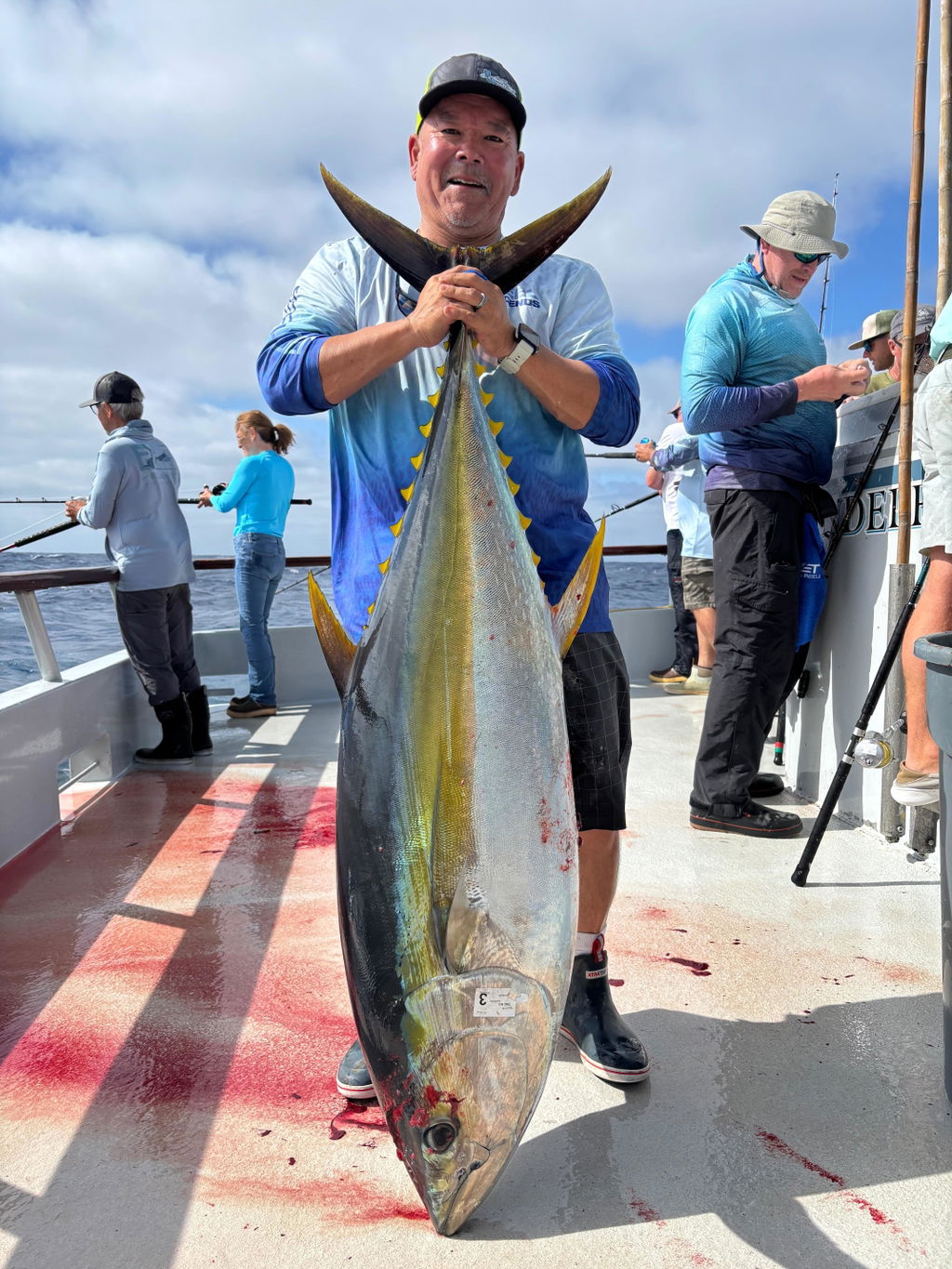
Imagine being connected to a large bluefin on a Southern California sportfishing boat.
The fish made its first run.
Then another.
Now it is circling deep beneath the boat.
The rod is loaded.
The line angle keeps changing.
Every time the tuna turns, the leader and connections are working under pressure.
At this point, the fish does not care what number was printed on the spool.
What matters is whether the entire system can handle the load.
But there is another side to the decision.
Before that fish ever bites, your leader still has to fish properly.
A heavy, stiff connection may be appropriate for a large bait or certain heavy-tackle presentations. It may be a poor choice when a smaller live bait needs to swim naturally.
The right big game leader balances getting bit with having enough strength and abrasion margin to finish the fight.
Key Takeaways
-
There is no universal fluorocarbon leader size for every big bluefin tuna.
-
Choose leader strength based on the fishing method, expected fish, drag pressure, and abrasion exposure.
-
A heavier leader provides more nominal strength but may increase diameter and stiffness.
-
100–150 lb leaders can be useful in some heavy live-bait and tuna setups.
-
200 lb leader is more specialized and may suit demanding heavy-tackle applications.
-
300 lb leader should be selected for a specific rigging need, not simply because the fish might be large.
-
Knot quality, connection design, drag management, and abrasion inspection matter as much as the leader label.
-
Fluorocarbon can support a clean presentation, but it cannot compensate for poor rigging or fighting technique.
Why Does Leader Strength Matter When Fighting Big Bluefin Tuna?
Leader strength matters because a large bluefin can place sustained pressure on the tackle while changing direction, diving beneath the boat, and creating abrasion risks during the fight.
A large tuna is not necessarily going to break a leader simply because it weighs more than the leader's rated pound test.
That is not how fishing line works.
A 150 lb fish does not automatically require 150 lb leader.
And a 250 lb tuna does not automatically require 250 lb leader.
The actual load depends on drag settings, rod angle, fish movement, shock loading, connection efficiency, and other conditions.
The leader's rated strength is one part of that system.
Why do big bluefin expose weak connections?
Big bluefin fights can last long enough for small rigging problems to become serious.
A poorly seated knot may tighten or deform under pressure.
An abrasion-damaged leader may lose strength.
A connection that looked acceptable at the rail may become the weak point when the fish changes direction.
This is why experienced anglers inspect the entire connection before sending out another bait.
They are not just choosing a pound test.
They are choosing how much confidence they have in the complete setup.

Is Heavier Fluorocarbon Always Better for Big Bluefin?
No. Heavier fluorocarbon can provide additional strength and abrasion margin, but it may also create a bulkier, stiffer presentation that is unnecessary for the conditions.
This is one of the most common mistakes in heavy tuna fishing.
An angler hears that large bluefin are around.
He immediately reaches for the heaviest leader available.
That decision may be reasonable for a specific heavy-tackle method.
But it should not be automatic.
Consider the difference between presenting a large live bait and flylining a smaller sardine.
A large bait may be capable of moving effectively with heavier terminal tackle.
A small sardine may struggle against the same setup.
The leader can affect how the bait swims, particularly near the hook.
If the presentation becomes unnecessarily restrictive, the angler may reduce the chance of getting bit before the fight ever begins.
Does heavier fluorocarbon mean more abrasion resistance?
Heavier leaders often provide more material between an abrasive surface and the line's core, but abrasion performance is not determined by pound test alone.
Diameter, material characteristics, contact pressure, surface condition, and the type of abrasion all matter.
A thick leader can still fail if it is repeatedly rubbed against a hard or sharp surface.
The correct approach is to choose adequate leader strength and inspect it carefully after contact.
More leader material can provide margin. It does not make the connection immune to damage.
What Fluorocarbon Leader Size Should You Use for Big Bluefin?
The best starting point is the fishing method and tackle system—not the estimated weight of the tuna alone.
The following ranges are practical considerations, not universal rules. They assume appropriately matched rods, reels, main line, connections, and drag settings.
| Leader strength | Potential application | Main consideration |
|---|---|---|
| 100 lb | Heavy live-bait or other tuna presentations where the tackle and conditions support it | May offer less bulk than heavier leaders, with less strength margin |
| 130 lb | Heavy tuna setups needing additional strength while retaining some presentation flexibility | Balance between diameter, strength, and rigging requirements |
| 150 lb | Demanding heavy live-bait or heavy-tackle presentations | Greater strength margin, with increased bulk |
| 200 lb | Specialized heavy-tackle, large-bait, or heavy-lure applications | Connection design and presentation become increasingly important |
| 300 lb | Highly specialized big game terminal rigging where very heavy leader is appropriate | Requires compatible hardware and careful rigging; generally unsuitable for small live bait |
These are not fish-weight recommendations.
 A large tuna can be caught on lighter leader under appropriate conditions, while a smaller fish can break heavier tackle when the rigging or fight goes wrong.
When does 100 lb fluorocarbon make sense?
A 100 lb leader may be considered when the angler needs a heavy connection but wants to avoid unnecessary bulk.
It can be useful in some live-bait presentations where the bait must still move naturally.
However, the decision depends on the fish being targeted, the amount of drag used, and the abrasion risks around the boat.
If the setup requires more strength margin, 100 lb may not be the appropriate choice.
When should you move to 130 or 150 lb?
These sizes can be useful when an angler wants additional strength without immediately moving into extremely heavy leader material.
The tradeoff is increased diameter and potentially greater stiffness.
For large live bait, that tradeoff may be acceptable.
For smaller bait, it deserves more attention.
Before making the change, ask whether the current leader is actually limiting the tackle system.
If the drag, rod, reel, and connections are not matched to the heavier leader, increasing pound test may provide less practical benefit than expected.
When does 200 lb fluorocarbon become useful?
A 200 lb leader may be appropriate for specialized heavy-tackle applications where additional strength and abrasion margin are priorities.
At this point, connection design becomes especially important.
Not every knot is suitable for every heavy fluorocarbon diameter.
Some anglers use crimps or other purpose-built connections when the leader becomes too heavy or stiff for reliable knotting.
The correct method depends on the leader, hardware, and rigging system.
Do you really need 300 lb fluorocarbon for bluefin?
Sometimes, but it should be a deliberate choice.
A 300 lb leader is not a general recommendation for flylining sardines.
It belongs in specialized big game applications where the tackle, terminal hardware, and fishing method justify that much material.
For many live-bait situations, it introduces more bulk than necessary.
The largest available leader is not automatically the most effective leader.
How Does Leader Diameter Affect Big Tuna Bait Presentation?
Leader diameter can influence how freely a bait moves through the water, particularly when the bait is small relative to the terminal tackle.
This matters because getting a bite and landing a fish are separate problems.
A heavy leader may improve the available strength margin.
But it may also affect the presentation before the tuna commits.
Picture two anglers fishing live bait.
One is using a large bait capable of pulling line strongly.
The other is using a smaller sardine.
Both anglers tie on the same heavy leader.
The larger bait may move effectively.
The smaller sardine may experience more restriction.
That does not mean the heavier leader is wrong.
It means the presentation needs to be evaluated.
Does leader stiffness matter more as pound test increases?
It can.
As fluorocarbon diameter increases, the material generally becomes harder to bend.
That can affect knot seating, connection bulk, and movement near the hook.
A supple finish may help with handling, but it does not eliminate the physical effects of a very heavy leader.
Anglers should pay attention to how the bait actually swims rather than assuming every heavy leader behaves the same.
Should you downsize if bluefin refuse the bait?
Not immediately.
First check whether the bait is healthy.
Then examine hook placement, line tension, casting position, and how the bait is moving.
If those fundamentals are correct and the fish remain selective, leader diameter may be worth reconsidering.
But downsizing must still leave enough strength for the fight.
A cleaner presentation is useful only if the tackle remains appropriate for the fish and conditions.
How Much Drag Can a Heavy Fluorocarbon Leader Handle?
The amount of drag a leader can safely handle depends on the complete tackle system, not just the leader's advertised breaking strength.
There is no single drag setting that works for every 100, 130, 150, or 200 lb fluorocarbon leader.
Actual performance depends on knot or crimp efficiency, line condition, rod characteristics, reel behavior, and the changing forces during a fight.
This is especially important with big bluefin.
A sudden run can create a different load than steady pressure.
A changing rod angle can also change how force is transmitted through the tackle.
And a leader weakened by abrasion may fail below its original rated strength.
Should you increase drag because you switched to heavier leader?
Not automatically.
A heavier leader does not mean the reel, main line, knots, hooks, or rod can safely handle more pressure.
Increasing drag without evaluating the full system can simply move the failure point somewhere else.
Drag should be set and checked using appropriate equipment and the recommendations of the tackle manufacturer, captain, or experienced crew.
The goal is controlled pressure throughout the fight.
Not the highest drag number possible.
Why Do Big Bluefin Leaders Fail Near the Boat?
Leaders can fail near the boat because sustained pressure, abrasion, changing line angles, and damaged connections may combine during the final stages of a fight.
The last part of a big tuna fight can be demanding.
The fish may be circling deep.
The line angle changes as the tuna moves beneath the boat.
The angler may be applying sustained pressure.
The leader may also encounter the hull or other abrasive surfaces.
A leader that was already damaged earlier in the fight has less margin available.
What should you watch during deep circles?
Watch the line angle.
Follow crew instructions about moving along the rail.
Avoid allowing the line to rub against the hull whenever possible.
Do not grab or wrap heavy leader around your hands.
And do not attempt to lift or control a large tuna by hand unless the crew is directing an appropriate landing procedure.
The deckhands are managing the landing as well as the safety of the anglers around you.
A good leader is important.
But boat handling, communication, and fighting technique still determine much of what happens.
Are Knots or Crimps Better for Heavy Fluorocarbon?
Neither knots nor crimps are automatically better in every heavy fluorocarbon application. The correct connection depends on leader diameter, hardware compatibility, rigging method, and execution.
A well-tied knot can perform effectively when it is appropriate for the leader and properly seated.
But very heavy fluorocarbon can be difficult to knot consistently.
The material may resist bending.
The knot may not seat correctly.
Or the finished connection may be too bulky for the application.
Crimps can be useful in heavy big game rigging, but they introduce their own requirements.
The sleeve must match the line and hardware.
The crimping tool must be appropriate.
And the connection must be assembled and compressed correctly.
A poorly made crimp is not safer simply because it replaces a knot.

What should you inspect before fishing?
Check the connection for visible damage.
Look for flattened, kinked, or distorted leader material.
Inspect knots for poor seating.
Check crimps for obvious damage or incorrect placement.
Confirm that hooks, swivels, and other hardware are compatible with the leader.
If the connection looks questionable, rebuild it.
Do not wait until a large fish exposes the problem.
When Should You Replace a Big Game Fluorocarbon Leader?
Replace or rebuild a big game leader when abrasion, kinks, connection damage, or other signs of weakening make its reliability questionable.
Heavy fluorocarbon can still be damaged.
A leader that has contacted the hull may need inspection.
A leader that has rubbed against rough surfaces may have lost strength.
A connection subjected to a demanding fight may deserve a closer look before the next bait goes out.
Run your fingers carefully along accessible sections of the leader.
Look for rough spots, flattening, clouding from damage, and sharp bends.
Inspect the areas closest to the hook and connections.
These are common places for problems to appear.
Should you reuse a leader after landing a big bluefin?
Only after a careful inspection and when the rigging remains suitable.
A leader does not automatically become unusable after one fish.
But neither should it be trusted simply because it survived the previous fight.
If the material or connection has been compromised, replace it.
The cost of rebuilding a questionable leader is small compared with losing the next fish because of an avoidable failure.
What Are the Biggest Mistakes Anglers Make With Heavy Fluorocarbon?
Most heavy-leader mistakes come from treating pound test as the entire answer rather than evaluating the complete fishing system.
| Common mistake | Why it matters | Better approach |
|---|---|---|
| Choosing leader based only on tuna weight | Fish weight does not equal the load on the line | Match the leader to the method, tackle, and conditions |
| Automatically using the heaviest leader | Can add unnecessary bulk and stiffness | Use enough strength without compromising presentation unnecessarily |
| Increasing drag after upsizing leader | Other components may become the weak point | Evaluate the entire tackle system |
| Using an unsuitable knot | Heavy material may not seat reliably | Choose a connection suited to the leader diameter |
| Crimping without proper tools | Incorrect compression can weaken the connection | Use compatible sleeves and appropriate tools |
| Ignoring abrasion | Damaged heavy leader can still fail | Inspect and replace compromised material |
| Fishing damaged connections | Small defects can become failure points | Rebuild questionable connections |
| Blaming the leader for every missed bite | Bait condition and presentation may be the real issue | Check the fishing fundamentals first |
The lesson is simple.
Do not ask only whether the leader is strong enough.
Ask whether the entire setup is right for the job.
Where Does Opsin Big Game Fluorocarbon Fit Into Heavy Tuna Fishing?
Opsin Big Game Fluorocarbon is intended for heavy offshore applications where anglers need leader material that supports dependable connections, abrasion resistance, and demanding big game tackle.
Opsin Big Game covers the 100–300 lb range.
 It is made from 100% PVDF and slow-extruded in Japan, with cloud-free clarity and a supple finish.
Those manufacturing characteristics are relevant when anglers are selecting and handling heavy leader material.
Consistency matters because heavy connections need to be rigged carefully.
Abrasion resistance matters because large tuna can create demanding situations around the boat.
And presentation still matters because a leader has to help deliver the bait or lure before it ever gets tested by a fish.
But premium fluorocarbon is not a substitute for sound rigging.
As Greg Brown of Opsin Fluorocarbon explains:
“We can control how the fluorocarbon is made. The angler still controls the connection. Good material gives you a clean starting point, but you still have to tie it right and check it.”
— Greg Brown, Opsin Fluorocarbon
That is particularly relevant when fishing heavy leaders.
The material provides the starting point.
The angler still chooses the correct strength, builds the connection, checks the rigging, and manages the fight.
Opsin Big Game is a tool for demanding fishing—not a shortcut around good fishing decisions.
How Do You Choose the Right Big Game Leader Before Leaving the Dock?
Start with the fishing method and expected conditions, then choose a leader that works with the entire tackle system.
Big Bluefin Leader Checklist
-
Identify whether you will be fishing live bait, large bait, jigs, or another heavy-tackle presentation.
-
Consider the expected tuna size without using fish weight as the only guide.
-
Match the leader to the rod, reel, main line, and intended drag pressure.
-
Evaluate the bait size and how naturally it needs to swim.
-
Choose enough strength and abrasion margin for the conditions.
-
Avoid unnecessary diameter and stiffness.
-
Select knots or crimps appropriate for the leader size.
-
Use compatible hooks, swivels, sleeves, and other hardware.
-
Inspect the entire leader for abrasion and kinks.
-
Check that all connections are properly assembled.
-
Test the rigging appropriately before fishing.
-
Confirm your drag settings with the crew or tackle manufacturer.
-
Prepare spare leaders or terminal rigs before the bite starts.
-
Replace questionable material rather than trying to save it.
The best time to discover a rigging problem is before a large tuna takes the bait.
FAQ
What pound test fluorocarbon should I use for big bluefin tuna?
There is no single correct pound test. Heavy bluefin setups may use leaders in the 100–200 lb range or other strengths depending on the fishing method, tackle, drag pressure, bait size, and conditions. Specialized applications may justify heavier material.
Is 100 lb fluorocarbon enough for big bluefin?
It can be appropriate in some heavy-tackle situations, but not all. The answer depends on the entire setup, including drag pressure, connections, abrasion exposure, and fighting conditions. The fish's weight alone does not determine the correct leader.
Should I use 130 or 150 lb fluorocarbon for bluefin?
Both can be considered for heavy tuna applications. The better choice depends on how much strength margin is needed and whether the additional diameter affects the presentation or rigging.
When should I use 200 lb fluorocarbon?
A 200 lb leader may be suitable for specialized heavy-tackle, large-bait, or heavy-lure applications where greater strength and abrasion margin are priorities. It should be matched with compatible terminal hardware and connections.
Is 300 lb fluorocarbon necessary for giant bluefin?
Not routinely. A 300 lb leader is a specialized choice for certain heavy big game applications. It is not automatically necessary because a tuna is large, and it may be unnecessarily bulky for smaller live bait.
Is heavier fluorocarbon more abrasion resistant?
Heavier fluorocarbon often provides more material to withstand contact, but abrasion resistance depends on more than pound test. The material, diameter, contact surface, pressure, and existing damage all matter.
Are crimps stronger than knots for big game fluorocarbon?
Not automatically. Properly assembled crimps can be useful for very heavy leader material, while suitable knots can work well in other applications. Connection quality and compatibility are more important than assuming one method is always stronger.
Does fluorocarbon leader diameter matter for giant bluefin?
It can, especially when presenting live bait. A thicker, stiffer leader may restrict smaller bait more than a thinner one. The correct choice balances presentation with the strength and abrasion margin required for the fight.
Should I replace fluorocarbon after catching a big tuna?
Inspect it carefully before reuse. Replace any leader or connection showing abrasion, kinks, deformation, or other damage. Surviving one fight does not guarantee the material is ready for another.
Final Takeaway
Big bluefin tuna do not care what pound test is printed on your spool.
The leader needs to work before the bite and hold up during the fight.
That means choosing enough strength for the tackle and conditions without adding unnecessary bulk to the presentation.
It means understanding that 100, 130, 150, 200, and 300 lb fluorocarbon are not interchangeable solutions.
And it means checking every knot, crimp, and section of leader before putting the rig back in the water.
A heavy leader can provide useful strength and abrasion margin.
But it cannot fix a poor connection.
It cannot replace proper drag management.
And it cannot make an unsuitable bait presentation effective.
For big bluefin, the right leader is the one that lets you fish the presentation properly and gives your tackle the strength margin it needs when the fight gets serious.
Explore Opsin Big Game Fluorocarbon for 100–300 lb leader options designed for demanding offshore fishing.
Opsin Gets You Bit.