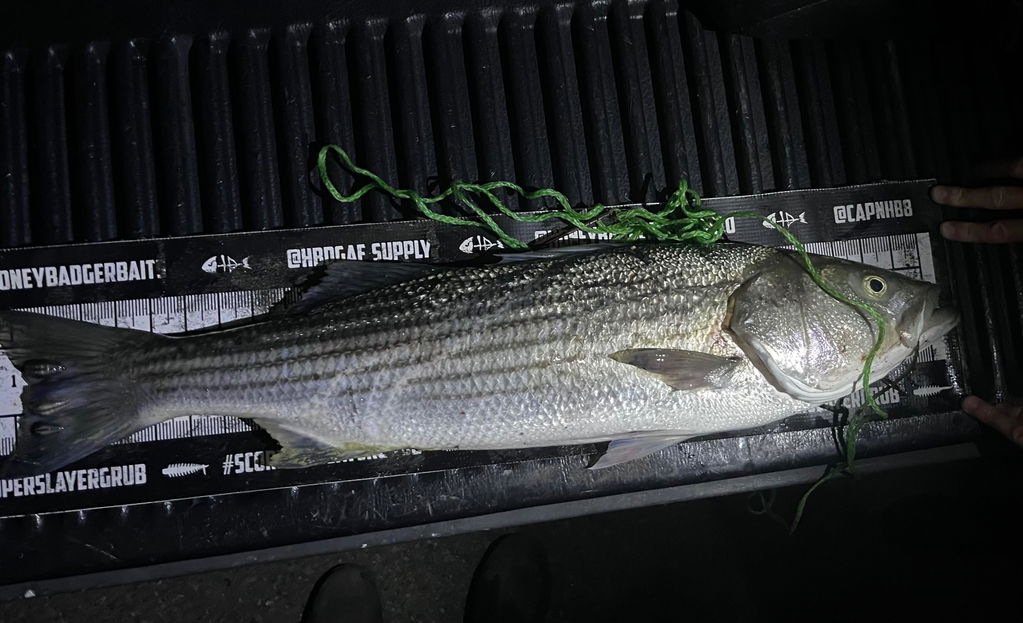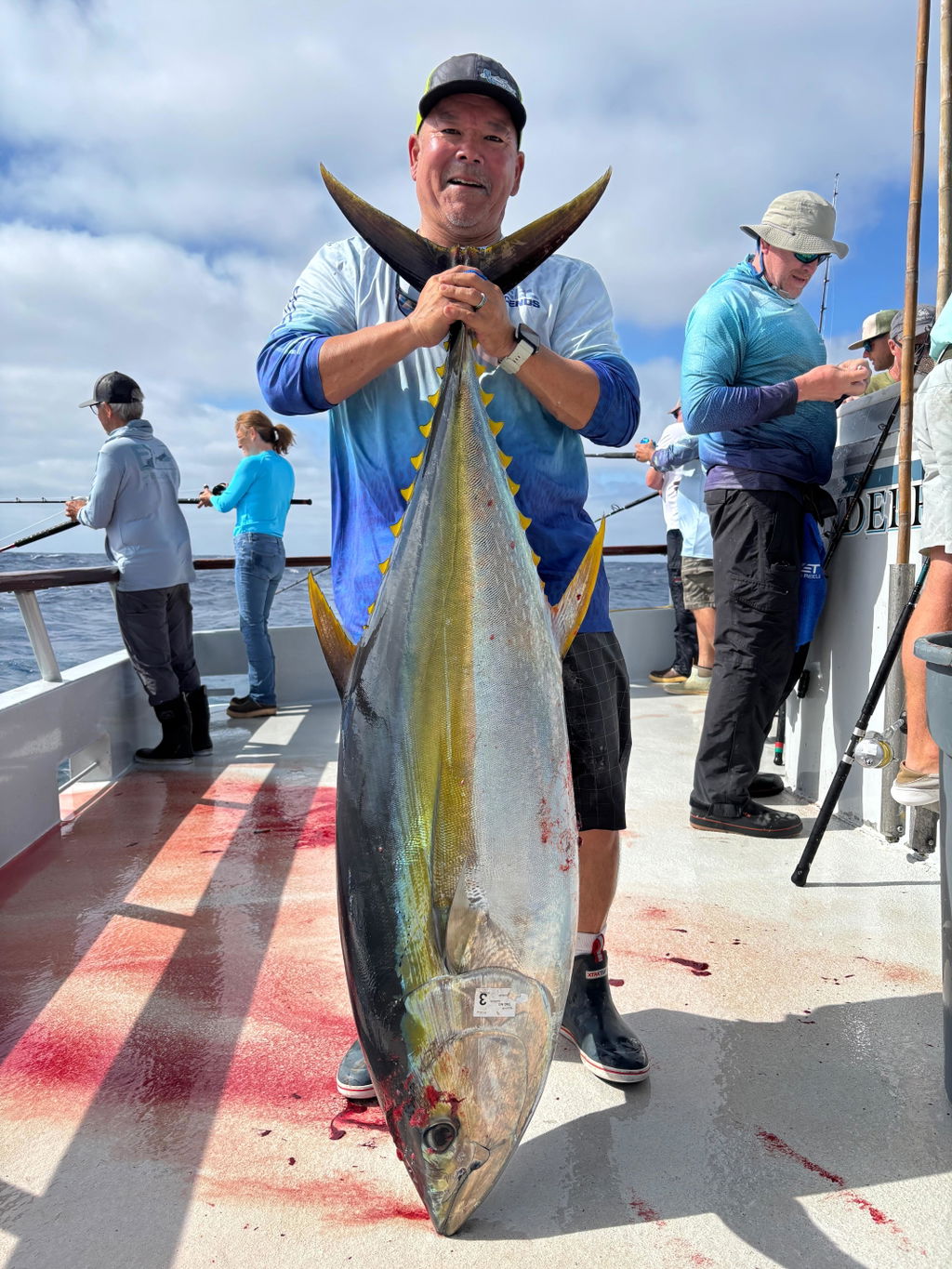

After landing a hard-fighting fish, inspect the hook, hook knot, working section of leader, main-line connection, and drag before sending the setup again.
You do not need to automatically replace everything that just caught a fish. Look for actual evidence—abrasion, nicks, hard kinks, deformation, knot damage, hook problems, or anything else that changed during the fight. If the setup comes back clean, keep fishing. If something gives you a reason not to trust it, fix it before the next bite.
Key Takeaways
- A landed fish does not automatically mean the setup is ready for another one.
- Start at the hook and inspect backward toward the main line.
- Feel the leader instead of relying only on what you can see.
- Pay extra attention after crossed lines, contact with the boat, kelp, or structure.
- Inspect both connections, not only the hook knot.
- Check the hook itself for damage or anything unusual.
- Do not automatically throw away clean fluorocarbon.
- Retie or replace based on condition, not habit.
- Once the setup checks out, stop inspecting and get back in the water.
The fish hits the deck.
Everybody looks at it.
The crew gets the hook out.
Somebody takes a photo.
And if the school is still around, your next thought is obvious:
Get another one.
That urgency makes sense.
Bluefin are still marking.
Yellowtail are still boiling.
Dorado are still charging around the paddy.
But your tackle just went through the same fight you did.
Maybe the fish ran under another angler.
Maybe the leader rubbed the hull.
Maybe a yellowtail made it into the kelp before you turned it.
Maybe nothing bad happened at all.
You do not know until you check.
The goal is not to rebuild a perfectly good setup after every fish.
The goal is to catch the small problem before the next fish finds it.
Why Should You Inspect Your Setup After Landing a Fish?
A hard fight can change the condition of your leader, knots, hook, and connections even when everything performed well enough to land the fish.
Landing the fish tells you something important:
The setup worked.
It does not tell you that the setup came through the fight unchanged.
Those are different questions.
A leader can land a tuna and still come back with abrasion.
A knot can hold and still leave the surrounding material looking questionable.
A hook can survive a fight and still deserve inspection.
That is why the few seconds after the fish is landed matter.
Do not assume damage.
Look for it.
Where Should You Start Your Inspection?
Start at the hook and work backward through the entire terminal setup.
The hook is a logical starting point because it was directly involved in the fight.
Look at it.
Check the point.
Check the shape.
Look at the connection.
Then inspect the leader immediately above the knot.
From there, run the fluorocarbon between your fingers as you work toward the main-line connection.
You are looking and feeling for anything that was not there before.
The process should be deliberate.
It does not need to be slow.
What Leader Damage Should You Look For?
Look for abrasion, nicks, roughness, hard kinks, flattened sections, cuts, and other changes in the fluorocarbon.
Some damage is obvious.
Some is easier to feel than see.
Run the working section between your fingers.

A rough spot deserves a closer look.
So does a hard bend that does not relax.
If you find a questionable section, think about where it is and what happened during the fight.
Did the fish rub the boat?
Did lines cross?
Did it reach kelp?
Did the leader come into contact with something near the fish?
The fight can help explain what your fingers are finding.
But the condition of the material should make the final decision.
Should You Automatically Replace Your Leader After Every Fish?
No. Replace or trim your leader when inspection gives you a reason, not simply because it caught a fish.
Throwing away clean fluorocarbon after every catch does not make the setup more technical.
It makes it wasteful.
The opposite extreme is no better.
Do not keep fishing damaged leader just because it landed the previous fish.
Use the evidence in front of you.
Clean and smooth?
Keep fishing.
Rough, nicked, sharply kinked, flattened, or damaged?
Remove the affected material.
The previous fish does not decide.
The condition of the leader does.
Why Should You Check the Hook Knot Again?
Check the hook knot because the connection has just spent an entire fight under load.
Do not inspect only the knot itself.
Look at the fluorocarbon immediately above it.
Does everything still sit cleanly?
Is the leader pinched?
Is there a hard bend?
Does anything look distorted?
If the connection looks and feels right, leave it alone.
If you find something you do not trust, retie.
This is one of those decisions that is easier to make before the next fish eats.
“A knot doesn't get a pass because it looks close enough. If something doesn't seat right, I cut it off and tie it again. I'd rather lose another minute at the rail than find the problem when a fish is pulling on it.”
— Alan Bierig, Co-Owner & Long-Range Angler, Opsin Fluorocarbon
Why Should You Check the Main-Line Connection Too?
The main-line connection deserves inspection because the entire system was loaded during the fight, not only the hook end.
This is easy to forget.
Most anglers naturally focus on the last few feet of leader.
That is where the fish was.
That is where obvious abrasion often appears.
But your main-line connection was working too.
Take a look at it.
Make sure the connection remains clean and properly seated.
Inspect the surrounding leader and main line.
You do not need to rebuild a clean connection after every fish.
You do need to notice when it is no longer clean.
Should You Check the Hook After Landing a Fish?
Yes. Inspect the hook before assuming it is ready for another hard fight.
Look at the point.
Look at the shape.
Check the eye and connection.
If anything appears damaged or questionable, replace it.
The hook is easy to overlook because it did its job.
But the same logic applies here as everywhere else in the setup:
Surviving the previous fish does not automatically qualify a component for the next one.
Inspect it.
Then decide.
What Should You Check After a Bluefin Tuna?
After landing a bluefin, pay particular attention to leader condition, both connections, the hook, and anything that may have experienced contact during a prolonged fight.
Bluefin can keep a setup loaded for a long time.
The fish runs.
You gain line.
It takes line again.
Eventually it circles.
Angles change near the boat.
Other anglers may still be hooked up.
If lines crossed during the fight, inspect the areas that may have contacted each other.
If the leader came close to the hull, check it.
If nothing unusual happened, still give the terminal setup a quick inspection.
Long fights do not guarantee damage.
They simply give you more reasons to look.
What Should You Check After a Yellowtail Gets Near Kelp?
After a yellowtail reaches kelp or other structure, abrasion should move to the top of your inspection list.

Do not look only at the first damaged spot you find.
Feel the surrounding leader too.
A yellowtail that spent part of the fight around kelp may leave obvious evidence.
Or the damage may be subtle.
If you find roughness or a damaged section, cut back to clean material.
Then make sure the remaining leader still gives you the setup you want.
Getting the fish out of the kelp was the first job.
Making sure the next fish does not start with compromised leader is the second.
What Should You Check After a Dorado?
After landing a dorado, inspect quickly but do not let the pace of the bite convince you to skip the check completely.
Dorado can turn a quiet kelp paddy into chaos.
One fish gets hooked.
Then another.
People move around the stern.
Everybody wants another bait or another cast.
That is exactly when shortcuts happen.
Your inspection does not need to take five minutes.
Hook.
Knot.
Leader.
Connection.
If everything is clean, go.
The faster the fishing gets, the more useful a simple routine becomes.
Why Do Crossed Lines Deserve Extra Attention?
Crossed lines create another opportunity for friction and localized damage, so any involved section deserves closer inspection afterward.
Sometimes two lines touch and separate without an obvious problem.
Sometimes they do not.
Do not guess.
After the fish is landed, think about where the contact occurred.
Feel the leader.
Inspect the main line if necessary.
Look for roughness or damage that was not there before.
The fact that you landed the fish does not mean the crossed line had no effect.
It means the connection survived long enough to finish that fight.
Should You Check Your Drag After a Hard Fight?
Yes. If the fight was unusually hard, the setup changed, or the drag behaved differently than expected, check it before sending the rig again.
You are not trying to reinvent the drag setting after every fish.
You are confirming that the reel is behaving the way you expect.
Did anything feel inconsistent?
Did you make adjustments during the fight?
Are you switching to a different setup?
Is the next fish likely to create a different problem?
Handle those questions while there is no fish pulling on the other end.
A screaming reel is not the best time for troubleshooting.
What If Everything Looks Fine?
If the leader is clean, both connections look right, the hook is sound, and the tackle is functioning properly, stop looking for reasons to retie and get back to fishing.
This is important.
Inspection is useful.
Compulsive rebuilding is not.
A good setup does not become suspicious simply because it caught a good fish.
Check it.
Trust the evidence.
Then fish it.
If bluefin are still around, the worst possible outcome may be spending the entire stop fixing problems that do not exist.
What Should You Do if You Find Damage?
Remove the damaged section and rebuild only as much of the setup as necessary to restore a clean, dependable connection.
Damage near the hook?
Cut back and retie if enough leader remains.
Damage near the main-line connection?
Rebuild that connection with clean material.
Leader rough through a larger section after structure or heavy contact?
Replace what needs replacing.
Hook damaged?
Change it.
The objective is not to preserve every inch of leader.
It is also not to throw everything away.
Fix the actual problem.
How Do You Decide Whether to Retie or Replace the Entire Leader?
The location and extent of the damage should determine whether you trim and retie or replace the complete leader.
| What You Find | What to Do |
|---|---|
| Clean leader and clean connections | Keep fishing |
| Damage close to hook | Trim to clean material and retie if enough leader remains |
| Questionable hook knot | Retie |
| Damaged hook | Replace hook |
| Small isolated abrasion | Remove affected section |
| Widespread roughness or multiple damaged areas | Replace leader |
| Damage near main-line connection | Rebuild connection with clean material |
| Hard permanent kink | Remove damaged section |
| Damage after kelp or structure | Inspect beyond the obvious spot |
| Everything looks right | Stop adjusting and fish |
That last option deserves to stay on the list.
Sometimes the correct adjustment is no adjustment.
Does a Hard Fight Mean You Should Go Heavier on the Next Fish?
Not automatically. A difficult fight is information, but it does not prove your leader size was wrong.
Ask why the fight was difficult.
Was the fish simply larger?
Did it reach structure?
Did the leader come back heavily abraded?
Were you unable to apply the pressure the situation required?
Or did the setup perform exactly as intended and land the fish cleanly?
If the setup worked and came back in good condition, going heavier may solve nothing.
If repeated fights are exposing the same limitation, that is different.
Look for a pattern.
Do not build a new rule from one exciting fish.
Where Does Opsin Fluorocarbon Fit After a Hard Fight?
Opsin Fluorocarbon gives you consistent leader material to work with, but the angler still has to determine whether that material remains clean enough to fish again.
Opsin is 100% PVDF fluorocarbon, slow-extruded in Japan with cloud-free clarity and a supple finish.
Knot strength and abrasion resistance matter during demanding fights.
But abrasion resistance does not mean abrasion-proof.
Strong knots do not mean you should ignore a damaged connection.
And premium fluorocarbon does not eliminate the need to run your fingers down the leader after a fish puts it to work.
The material does its job.
You still have to inspect the result.

“We can control how the fluorocarbon is made. The angler still controls the connection. Good material gives you a clean starting point, but you still have to tie it right and check it.”
— Greg Brown, Founder of Opsin Fluorocarbon
Quick Checklist: What Should You Check After Landing a Fish?
Before sending the setup again:
- Inspect the hook.
- Check the hook point.
- Look at the hook knot.
- Inspect the leader immediately above the knot.
- Run the working section between your fingers.
- Look for abrasion, nicks, kinks, or flattening.
- Check areas involved in crossed lines or contact.
- Inspect the main-line connection.
- Check the surrounding main line.
- Think about whether the fish reached structure.
- Check the drag if anything changed during the fight.
- Fix actual damage.
- Leave clean tackle alone.
- Get back in the water.
The entire check can take less time than tying a new connection you did not need.
FAQ
Should I replace fluorocarbon after catching a fish?
Not automatically. Inspect the fluorocarbon for abrasion, nicks, hard kinks, flattening, and other damage. Replace or trim the leader when its condition gives you a reason.
Should I retie my hook after every bluefin?
No. Inspect the hook knot and surrounding leader first. If the knot remains properly seated and the leader is clean and undamaged, there is no automatic need to retie solely because you landed a bluefin.
What should I check after a long tuna fight?
Check the hook, hook knot, working section of leader, main-line connection, and any areas that may have contacted another line, the fish, or the boat. Also confirm the drag is behaving properly if it was adjusted or acted unexpectedly.
Should I replace leader after a yellowtail gets into kelp?
Inspect it carefully. Kelp and structure can create abrasion, so remove any rough, nicked, kinked, or otherwise damaged section before fishing again.
Can fluorocarbon be damaged even if I landed the fish?
Yes. Landing the fish shows that the setup survived that fight. It does not prove every part of the leader remained unchanged or undamaged.
Should I go to heavier leader after landing a big fish?
Not automatically. Consider whether the existing leader was actually inadequate. If it performed properly and remains clean, the size of one fish alone does not require a change.
How can I tell if fluorocarbon abrasion is bad enough to replace?
Feel and visually inspect the leader. If a section is rough, nicked, sharply kinked, flattened, cut, or otherwise damaged enough that you do not trust it, remove that section rather than trying to get another fish out of it.
Final Takeaway
Landing the fish is not quite the end of the job.
Before you send the setup again, give it a few seconds.
Check the hook.
Check both connections.
Run your fingers down the leader.
Think about where the fish went during the fight.
If you find damage, fix it.
If everything comes back clean, leave it alone.
Then get another bait or make another cast.
Inspect what the fish actually worked. Fix what actually changed. Then get back to fishing.
When fluorocarbon has a job to do, start the next fight with a connection you trust.
Opsin Gets You Bit.