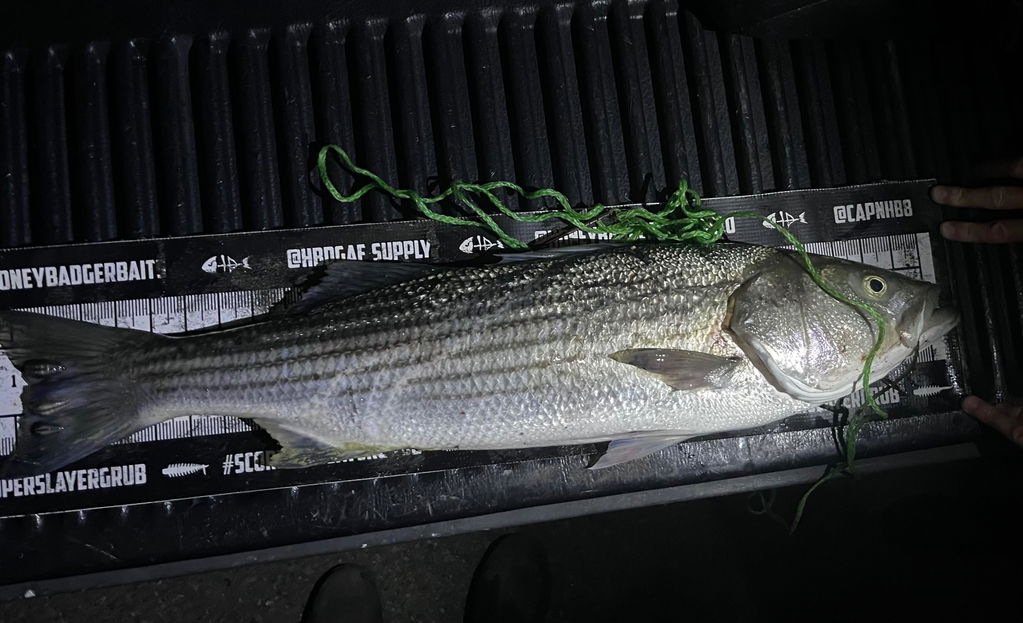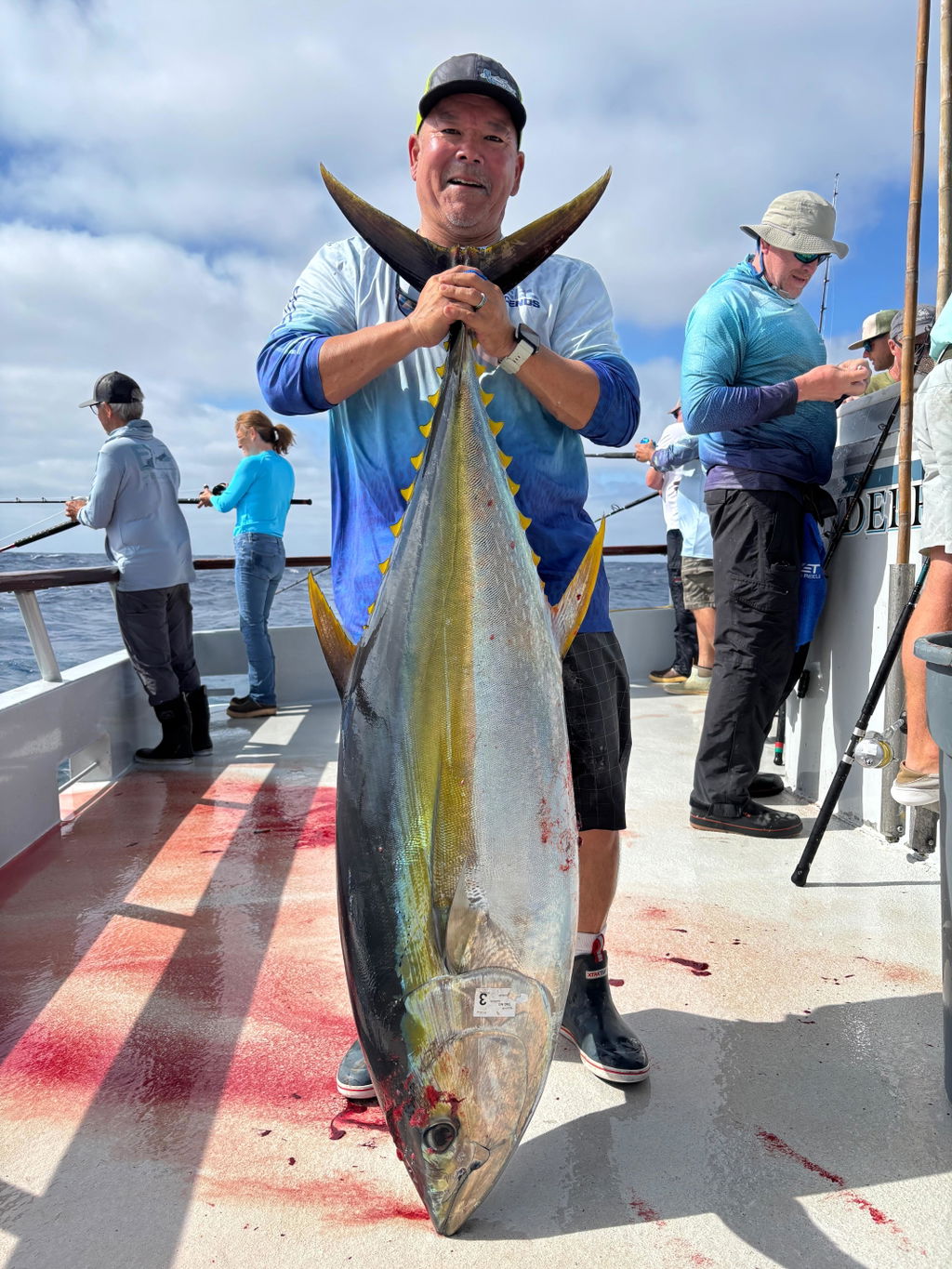

Before your first cast, check your leader for damage, inspect both connections, confirm your hook matches the bait, test your drag, make sure line comes off the reel cleanly, and pay attention to the bait and conditions in front of you.
The goal is not to obsess over every inch of tackle. It is to find simple problems at the rail instead of discovering them after a bluefin eats your sardine.
Key Takeaways
- Inspect fluorocarbon before fishing it, especially leader that was already rigged.
- Check both the hook knot and main-line connection.
- Make sure your hook matches the live bait you actually have.
- Test your drag before the first bite, not during it.
- Check that line leaves the reel cleanly without tangles or obvious problems.
- Look at water clarity, bait size, structure, and the fish you are targeting before deciding on leader.
- Do not automatically go lighter just because the bite is expected to be tough.
- A clean setup protects good fishing. It does not replace it.
The first mistake of the day usually doesn't feel important.
A knot gets tied quickly while the boat is still moving.
A leader that was rigged yesterday looks good enough.
The drag was fine on the last trip.
The hook sitting on the rod is probably close enough for the sardines in the tank.
Then the first school shows.
Now somebody is yelling for everyone to get a bait.
Bluefin are marking under the boat.
The stern fills up.
And every little problem you had plenty of time to fix five minutes ago suddenly has to survive a fish.
That is why the best time to inspect your setup is before anybody needs it.
Why Should You Inspect Your Leader Before Fishing?
Inspect your leader before fishing because damage, kinks, rough spots, and questionable sections are easier to fix before a bite than after one.
Start at the hook and work backward.
Run the fluorocarbon between your fingers.
You are looking and feeling for anything that does not belong:
- Nicks
- Rough sections
- Kinks
- Flattened areas
- Abrasion
- Damage close to either knot
- Anything that makes you hesitate
Pay particular attention to a rig that has already been fished.
Maybe it caught a fish yesterday.
Maybe it rubbed the rail.
Maybe it sat rigged on the rod while tackle got moved around.
You do not need to throw away clean leader because it is not fresh off the spool.
But if you find damage, deal with it now.

A questionable section does not become more trustworthy because the fish start biting.
Should You Retie a Leader That Was Rigged the Night Before?
Not automatically. A pre-rigged leader can be fished if the material and connections remain clean and undamaged.
Inspect it instead of replacing it by habit.
Check the hook knot.
Check the main-line connection.
Feel the working section.
Look for kinks or damage caused by storage or handling.
If everything is clean, there is no reason to invent a problem.
If the knot looks wrong or the leader has a section you do not trust, cut it out and retie.
That takes less time at the dock than it does when the first stop turns into a scramble.
Why Should You Check Both Knots?
Both connections matter because your terminal setup is only as dependable as the connection that actually gets loaded.
Anglers naturally look at the hook knot.
They should.
It sits closest to the fish, bait, teeth, and much of the action.
But do not ignore the other end of the leader.
Check your connection to the main line too.
You are looking for a knot that is properly seated and a leader that is not pinched, damaged, or distorted around the connection.
If you tied the rig in poor light, tied it quickly, or simply do not like how it seated, redo it.
There is no reason to defend a bad knot just because you already spent time tying it.
“Fluorocarbon is not a shortcut. It is a tool. When the bite is wide open, you can get away with a lot. When it gets technical, you cannot.”
— Greg Brown, Founder of Opsin Fluorocarbon
Does Your Hook Match the Bait You Actually Have?
Your hook should match the bait you are fishing today, not the bait you expected to have when you rigged the rod.
This is an easy one to miss.
You planned on sardines.
The boat loads smaller sardines.
Or the bait mix includes anchovies.
Suddenly the hook you tied on at home may not fit the presentation you are trying to fish.
Do not think only about the fish on the other end.
Look at the bait in your hand.
Can it carry the hook cleanly?
Does it swim well after you hook it?

A healthy flylined sardine should be allowed to do the work.
If the terminal setup fights the bait before a tuna ever sees it, the problem started before the cast.
Should You Test Your Drag Before the First Bite?
Yes. Test your drag before fishing so you know how the reel is behaving before a fish loads the setup.
The first bluefin of the morning is a bad drag tester.
So is a yellowtail pointed toward kelp.
Check it before the bait goes in.
You do not need to turn the process into a laboratory test at the rail.
You simply need to know that the drag is functioning smoothly and is set appropriately for the tackle and situation you are fishing.
Do the same after changing setups.
A heavier rig and a finesse live-bait setup are not the same problem.
Treat them accordingly.
Should You Check How Line Comes Off the Reel?
Yes. Make sure your line can leave the reel cleanly before asking a live bait to pull it away from the boat.
This is particularly important when flylining.
The sardine is already working.
Do not make it fight unnecessary resistance from your reel, tangled line, or poor line management at the same time.
Check for obvious trouble before you pin on the bait.
Make sure there is no loose line wrapped somewhere it should not be.
Make sure your setup is ready to feed line smoothly.
Then pay attention once the bait is in the water.
The leader is only one part of that system.
Should You Decide Leader Size Before Seeing the Conditions?
You can prepare a starting setup, but the conditions in front of you should have the final vote.
There is nothing wrong with arriving ready.
There is something wrong with refusing to adjust because yesterday's setup is already tied.
Look around.
Is the water clean?
Are bluefin crashing baits aggressively, or are they staying down and giving the boat short windows?
Are yellowtail sitting close to kelp?
Are dorado charging baits around a paddy?
Are you fishing a healthy sardine or trying to make a small anchovy carry the same terminal tackle?
Those details matter.
Leader selection is a balance between presentation and the amount of strength and abrasion protection the situation requires.
The right answer is not always lighter.
And it is definitely not always heavier.

When Should You Go Lighter Before the First Cast?
Start lighter only when the conditions give you a reason to prioritize a more refined presentation and the setup still makes sense for the fish you may hook.
Clear water, small bait, pressured fish, and a finesse live-bait presentation can justify paying closer attention to leader profile.
But do not turn that into a rule that says lighter is always better.
If yellowtail are holding tight to kelp, abrasion risk matters.
If better-grade bluefin are around, the fish on the other end matters.
If the bite is wide open, changing an already appropriate setup may accomplish nothing.
Start with the conditions.
Not somebody else's pound-test recommendation.
“Before the first bait goes out, I want the setup to make sense for what we’re actually seeing—not what I thought we were going to fish the night before. Bait size, water, structure, and the grade of fish all get a vote.”
— Alan Bierig, Co-Owner & Long-Range Angler, Opsin Fluorocarbon
What Changes When You're Fishing Bluefin, Yellowtail, or Dorado?
The basic pre-cast inspection stays the same, but the conditions surrounding each species change what deserves the most attention.
For bluefin on a flylined sardine, bait quality and a clean presentation can become increasingly important when a school is pressured.
For yellowtail around kelp, leader condition and abrasion risk deserve extra attention because getting the bite is only the beginning.
Dorado around a kelp paddy can turn a quiet deck into chaos quickly. A setup that was sitting untouched in the rack suddenly needs to be ready.
Different fish.
Same rule.
Fix the obvious problem before you put the bait in the water.
What Should You Check Based on the Situation?

That last line matters.
Checking your gear is useful.
Constantly changing a setup that has no obvious problem is not.
When Should You Stop Checking and Start Fishing?
Once the setup is clean, appropriate for the conditions, and functioning properly, stop looking for imaginary problems and fish it.
This is where preparation can turn into overthinking.
One angler is changing leader.
Another is tying a different hook.
Somebody heard the fish were eating a different pound test yesterday.
Meanwhile, the boat slides into position and the first good sardines are already swimming away from the stern.
Preparation should make you ready.
It should not make you late.
Do your checks before the stop.
Then when it is time to fish, fish.
Where Does Opsin Fluorocarbon Fit Into the Pre-Cast Check?
Opsin fits where fluorocarbon should fit: as one dependable part of a setup the angler has already thought through.
Opsin Fluorocarbon is 100% PVDF and slow-extruded in Japan, with a supple finish and cloud-free clarity.
Those characteristics are built around consistent leader performance, clean bait presentation, knot strength, and abrasion resistance.
But the material cannot inspect itself.
It cannot tell you that yesterday's leader got nicked.
It cannot fix a poorly seated knot.
It cannot choose the strongest sardine in the handwell.
It cannot decide whether yellowtail in the kelp require a different approach than picky bluefin in clean offshore water.
That part belongs to you.
Good fluorocarbon gives good decisions room to work.

“We built Opsin around consistency. Smaller diameter, cleaner presentation, strong knots — those details matter when the fish are giving you very few chances.”
— Greg Brown, Founder of Opsin Fluorocarbon
Quick Checklist: What Should You Check Before Your First Cast?
Before you grab the first bait:
- Inspect the leader. Feel for nicks, abrasion, roughness, kinks, or damage.
- Check the hook knot. Make sure it is seated cleanly.
- Check the main-line connection. Do not inspect only the hook end.
- Look at the hook. Make sure it fits the bait and presentation.
- Test the drag. Know how the reel is behaving before a fish does it for you.
- Check line management. Make sure line can leave the reel cleanly.
- Look at the bait. Sardine, anchovy, size, strength, and condition all matter.
- Look at the water. Clear water and pressured fish can reduce your margin for sloppy presentation.
- Look at the structure. Kelp or hard structure changes how much abrasion risk you can accept.
- Know what is swimming around. Bluefin, yellowtail, and dorado can demand different tradeoffs.
- Fix anything you do not trust.
- Stop adjusting once the setup makes sense.
- Fish.
The checklist takes longer to read than it does to perform.
That is the point.
FAQ
What should I check before my first cast?
Check your leader, both knots, hook, drag, line management, bait, and the conditions you are about to fish. Fix visible or questionable problems before putting a bait in the water.
Should I replace fluorocarbon leader before every fishing trip?
No. Fluorocarbon does not need to be replaced simply because you are starting another trip. Inspect previously used leader for abrasion, nicks, kinks, damaged sections, and questionable connections, then replace or retie when the condition gives you a reason.
Should I retie knots that were tied the night before?
Not automatically. If the knot is properly seated, undamaged, and the surrounding leader is clean, there is no reason to retie solely because it was tied the night before. If you have any reason to question the connection, retie it before fishing.
What should I check before flylining a sardine?
Make sure the sardine is healthy, the hook fits the bait, the leader and knots are clean, and line can feed smoothly from the reel. Once the bait is swimming, avoid unnecessary tension that restricts its movement.
Should I start with lighter fluorocarbon when bluefin are around?
Not automatically. Start with leader appropriate for the fish, bait, water clarity, and fishing pressure. If the bite becomes technical and the rest of the presentation is clean, changing leader can become a useful adjustment.
What should I check before fishing yellowtail near kelp?
Pay particular attention to leader condition, knot quality, abrasion risk, and whether the setup gives you enough control for the structure around the fish. A finesse presentation may help get a bite, but it still has to survive what happens afterward.
Does expensive fluorocarbon matter if the rest of my setup is wrong?
No. Premium fluorocarbon cannot correct weak bait, a bad knot, poor hook choice, an inappropriate drag setting, or bad line management. Leader quality becomes more useful after the angler has already handled the fundamentals.
Final Takeaway
The best time to find a problem is before the fish finds it for you.
Feel the leader.
Check both knots.
Test the drag.
Look at the bait.
Read the conditions.
Fix what needs fixing.
Then stop messing with it.
A clean setup does not catch the fish for you.
It just means that when you choose the right bait, make the right cast, and finally get picked up, you are not asking a preventable mistake to hold everything together.
Start clean. Fish the conditions. And when the leader matters, fish Opsin Fluorocarbon with confidence.